Picking out the right Battery Backup Light Bulb isn’t as straightforward as just matching brightness ratings. For folks around the world, it’s really about weighing a bunch of practical factors—like how long it can run during an outage, whether it fits your socket, the voltage it works with, how it charges, and whether it meets your local safety standards. A bulb that's perfect in a quiet apartment might not cut it in a humid warehouse or a home where power flips on and off all the time.
In this guide, we’re focusing on the features that actually matter when the power’s out. We look at things like lumen output (that’s how bright it really is), battery capacity, how fast it recharges, how quickly it switches on when needed, heat control measures, and how long the bulb’s expected to last. We’re also paying attention to common fittings—like E26, E27, and B22 bases—because compatibility issues can really hold you back during installation. Remember, don’t just take product claims at face value; check the manufacturer specs, look for independent tests, and make sure they meet your regional safety requirements. Marketing hype isn’t the same as real evidence.
Details matter a lot here. Your bulb should still be bright enough to light up stairs, doorways, or your work desk in emergencies. It should switch on smoothly without any confusing controls. Some models offer only a dimmer emergency mode that lasts for hours, while others give off a brighter light but for a shorter time. Neither is inherently better—it all depends on what you need.
Keep in mind, real-life use isn’t perfect. Batteries wear out over time, cold rooms can slow down charging, and some listed runtimes might seem a tad optimistic—especially at full brightness. That’s definitely worth paying attention to.
The comparisons we’re about to share are aimed at importers, distributors, facility managers, and regular households. They highlight dependable options suited for different climates, budgets, and installation setups. Of course, recommendations can’t be one-size-fits-all—since electrical standards, market priorities, and preferences differ around the world. Before hitting the order button, always double-check the documentation, warranty info, availability of replacements, and after-sales support. Because, at the end of the day, reliable performance starts even before you turn the bulb on.
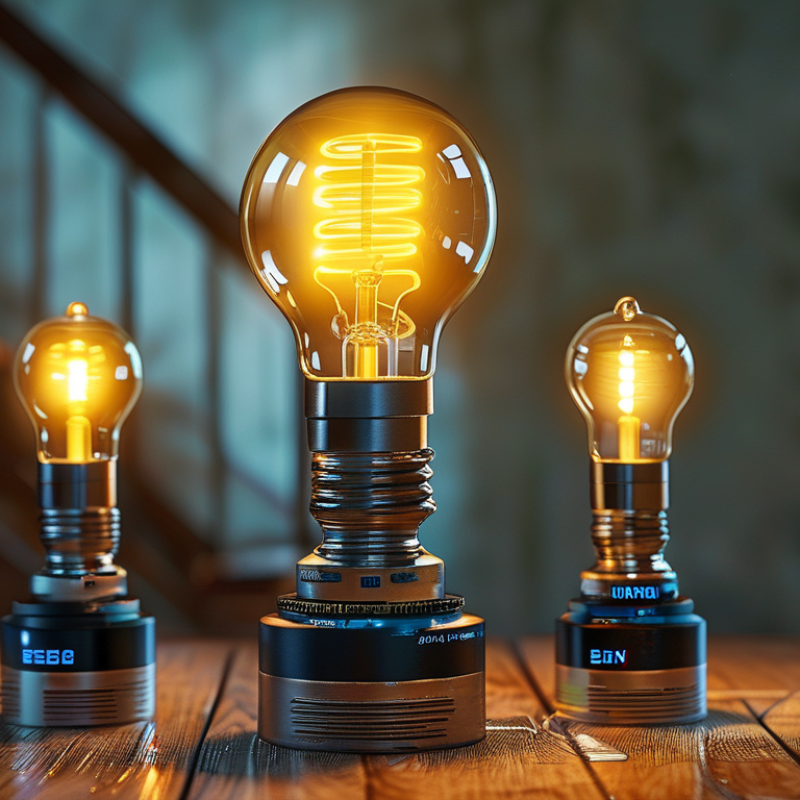
Understanding Battery Backup Light Bulbs
Understanding Battery Backup Light Bulbs begins with their dual purpose: everyday illumination and short-term emergency support. During a power outage, an internal rechargeable battery keeps the LED lamp operating, often through a switched wall fixture. The U.S. Department of Energy’s 2023 Solid-State Lighting R&D Opportunities report highlights LED efficiency as a major energy-saving factor. Lower wattage can reduce battery drain. That matters.
A Led Emergency Light Battery Backup bulb usually combines an LED driver, charging circuit, and lithium or nickel-based battery. The battery charges while mains power is available, then activates when voltage drops. NFPA 101 commonly references 90 minutes of emergency illumination for designated systems, but consumer bulbs may offer different runtimes. Buyers should check testing conditions, lumen output, charging time, and battery replacement guidance. A bright bulb may become noticeably dim after several minutes.
The International Energy Agency reports that lighting represents roughly 15% of global electricity consumption, making efficiency important beyond emergencies. However, advertised runtime can mislead. It may assume a new battery, moderate temperature, and stable voltage. Cold storage rooms, aging cells, or frequent outages can reduce performance. I would test a bulb monthly by switching off the circuit briefly, checking brightness near stairs, and recording how long useful light remains. Small details matter. A hallway may look bright, while a stair edge remains shadowed.
Key Features for Comparing Backup Light Bulbs
Top Battery Backup Light Bulbs for Global Buyers
Comparing backup light bulbs requires more than checking brightness. A useful test measures lumens, emergency runtime, charging time, and battery replacement needs. The U.S. Department of Energy reports that LED lighting uses at least 75% less energy than incandescent lighting and can last up to 25 times longer. That efficiency matters during repeated power cuts.
Battery chemistry deserves close attention. Lithium-based batteries usually offer lighter weight and better cycle performance, while nickel-based options may tolerate different operating conditions. Check the stated runtime at full brightness, not standby brightness. A bulb promising eight hours may provide less during real emergency use. For corridors, confirm the beam angle and color temperature. A harsh, narrow beam can leave dark steps. A Battery Backup Exit Signalso needs visible lettering, reliable charging, and tested emergency operation. IEC 60598-2-22 provides a useful reference for Emergency Lighting performance, although local requirements may differ.
Tips: Test the bulb after a full charge. Record brightness at one and three hours. Inspect heat around the base. Small details matter. The International Energy Agency has estimated that lighting represents about 15% of global electricity consumption, so efficient backup products can reduce routine energy use. Still, advertised figures are not always comparable. Battery aging, room temperature, and voltage variation can change results. I would also question unusually long runtime claims unless independent test conditions are clearly published.
Top Battery Backup Light Bulbs for Global Buyers - Key Features for Comparing Backup Light Bulbs
| Backup Bulb Type | Typical Rated Power | Typical Mains Lumens | Emergency Lumens | Backup Runtime | Recharge Time | Battery Chemistry | Common Cap Options | Best Use |
| Standard A-Shape LED Backup Bulb | 7–12 W | 700–1,100 lm | 300–600 lm | 2–4 hours | 8–12 hours | Lithium-ion | E26, E27, B22d | Homes, apartments, general room lighting |
| High-Lumen A-Shape Backup Bulb | 12–18 W | 1,100–1,800 lm | 500–900 lm | 1.5–3 hours | 8–12 hours | Lithium-ion | E26, E27, B22d | Kitchens, workshops, larger living areas |
| Candle or Small Decorative Backup Bulb | 4–8 W | 350–700 lm | 150–350 lm | 2–4 hours | 8–12 hours | Lithium-ion | E12, E14, B15d | Bedrooms, hallways, decorative fixtures |
| Rechargeable Screw-In Emergency Bulb | 7–15 W | 700–1,500 lm | 250–700 lm | 2–5 hours | 8–12 hours | Lithium-ion or lithium-polymer | E26, E27 | Portable emergency lighting and rental properties |
| Rechargeable Bulb with Pull-Cord or Switch Control | 5–12 W | 500–1,200 lm | 200–600 lm | 2–6 hours | 8–12 hours | Lithium-ion | E26, E27, B22d | Blackouts where independent operation is required |
| Solar-Compatible Rechargeable Bulb | 5–12 W | 500–1,200 lm | 200–600 lm | 3–8 hours | 8–12 hours by mains; longer with solar input | Lithium-ion or lithium-iron phosphate | E26, E27, B22d | Off-grid homes, outdoor shelters, disaster preparedness |
| High-Temperature or Industrial Backup Bulb | 10–20 W | 1,000–2,000 lm | 400–1,000 lm | 1.5–3 hours | 8–12 hours | Lithium-ion or lithium-iron phosphate | E26, E27, B22d | Garages, storage areas, light commercial spaces |
Comparison note: Specifications are typical product-category ranges. Actual brightness, runtime, charging time, operating temperature, and service life vary by design, battery capacity, ambient temperature, mains voltage, and load conditions.
Key Buying Checks for Global Buyers: Confirm the required voltage and frequency, lamp-base standard, emergency operating mode, regional safety certification, battery transport documentation, color temperature, power-factor requirements, warranty terms, and replacement or recycling provisions.
Choosing the Right Bulb for Different Lighting Needs
Choosing the right battery backup bulb starts with the space, not the highest lumen rating. A bedroom may need a soft 2700K light for comfort. A hallway usually benefits from 400–500 lumens and a neutral 3500K tone. In a kitchen, brighter output helps during an outage, especially near stairs and sharp edges. Check the socket type carefully. A small base mismatch can make a good bulb useless.
Runtime matters as much as brightness. For short interruptions, two hours may be sufficient. Areas with frequent outages need longer reserve power. Look for bulbs that charge automatically while installed and switch on when mains power fails. I once chose a very bright model for a narrow corridor. It created harsh glare and made the space feel less safe. My mistake was ignoring beam spread. A wide, even beam often works better than extreme brightness.
Outdoor use requires extra care. Only use bulbs rated for damp locations, and keep battery compartments protected from heat. For offices, storage rooms, and public paths, Battery Backup Emergency Exit Lights may be more suitable than standard household bulbs. They are designed for directional visibility and should meet applicable local safety requirements. Test every emergency light monthly. Batteries can weaken quietly, even when the bulb appears normal. Check charging indicators, clean dusty covers, and record the test date. The best choice is not always the brightest one.
Safety, Installation, and Maintenance Considerations
Top Battery Backup Light Bulbs for Global Buyers
Safety, Installation, and Maintenance Considerations
A battery backup light bulb can keep a hallway visible during a power cut. Safety begins before installation. Switch off the circuit breaker, then confirm the socket is not live. Use dry hands and inspect the bulb for cracks, loose parts, or swelling around the battery area. Never force it into an incompatible fitting.
Check the bulb’s voltage, base type, and operating temperature range before purchase. Electrical standards differ between countries, so local requirements matter. Follow the instruction sheet, especially for charging time and emergency testing. After installation, restore power and test the bulb briefly. Then switch off the circuit to confirm its backup mode. A simple test reveals problems early.
Maintenance is usually modest. Wipe the bulb with a dry, soft cloth every few months. Keep vents clear of dust and avoid placing it near heat, moisture, or flammable materials. Test the emergency function monthly. Battery performance may weaken after repeated outages, even when the bulb still appears normal. Replace the unit or battery only as directed, and follow local disposal rules.
One practical warning: people often install these bulbs and forget them. That is understandable, but risky. I once treated a quick test as enough, then noticed delayed illumination later. Regular checks are less convenient, yet they build confidence when darkness arrives unexpectedly.
Global Buying Factors: Standards, Voltage, and Availability
For global buyers, Battery Backup Emergency Lights should be judged by standards, voltage, and supply continuity—not brightness alone. The International Energy Agency’s Electricity 2024 report projects global electricity demand will grow 3.4% annually through 2026. Efficient emergency lighting therefore matters in homes, clinics, and small shops. The U.S. Department of Energy reports that LEDs can use at least 75% less energy than incandescent lamps. It also cites lifespans up to 25 times longer (DOE, LED Basics). Good data, but laboratory life is not a dusty storeroom.
IEC 60598-2-22 addresses emergency luminaires, while IEC 60598-1 covers general luminaire safety. A screw-in bulb may not qualify as a complete emergency luminaire. Ask for test reports, photometric data, battery chemistry, and rated discharge time. Look for clear markings on the carton. If compliance language is vague, pause. For lithium batteries, transport documentation and recycling instructions should be available. UN 38.3 testing supports transport safety, but it does not prove lighting performance.
Voltage mistakes are common. Check socket type, nominal voltage, frequency, and charging method before ordering. A 100–240 V input is convenient, yet the printed range must match the actual model. At home, I would test one unit through a full outage simulation, measuring light after 30 and 120 minutes. I still distrust impressive runtime claims without a lumen-versus-time curve. Availability also means replacement batteries, local returns, and stable spare stock. A cheap bulb becomes expensive when it cannot be replaced.
Conclusion
A Battery Backup Light Bulb is designed to provide essential illumination when the main power supply fails. It typically contains a rechargeable battery and an internal control circuit that automatically switches to battery power during an outage. When comparing options, buyers should consider brightness, battery runtime, charging time, bulb shape, color temperature, energy efficiency, and compatibility with existing fixtures. Different spaces may require different lighting levels, from soft ambient light in bedrooms to brighter illumination in hallways, kitchens, or work areas.
Safe installation and regular maintenance are important for reliable performance. Users should select the correct socket, follow the manufacturer’s instructions, avoid damaged fixtures, and keep the bulb clean and dry. Before purchasing internationally, buyers should check voltage and frequency compatibility, socket standards, applicable safety certifications, warranty terms, shipping conditions, and local availability. Understanding these factors helps global customers choose a dependable backup lighting solution that meets practical needs while supporting safe and efficient everyday use.





 Phone
 Send Email
 whatsapp