Leave Your Message
Online Inuiry
kl-internationalWhatsApp
StewardAllesGuteWeChat
General Lighting
0%

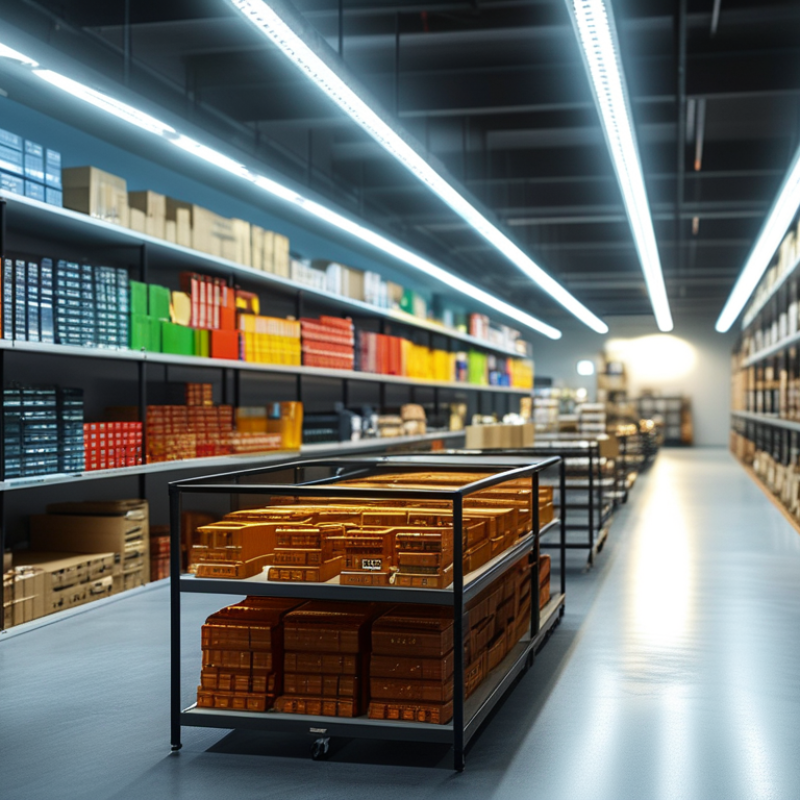
For a lot of businesses these days, lighting isn't just a background expense that gets ignored. It actually plays a pretty big role in grabbing customer attention, keeping employees comfortable, and even managing daily energy bills. That’s where Led Linear Lights come in—offering a simple, effective way to boost all these areas at once. Its sleek, continuous profile helps eliminate those annoying dark gaps you often see on retail shelves, office desks, warehouse aisles, and reception counters.

The U.S. Department of Energy points out that LED products use at least 75% less energy and can last up to 25 times longer than your standard incandescent bulbs. Plus, their Energy Savings Forecast highlights some serious long-term savings when more folks switch over to LEDs. The International Energy Agency also emphasizes that energy-efficient lighting is a key part of the global effort to cut down energy waste. All this sounds great, but keep in mind that how well an LED performs really depends on quality, how long it’s used each day, controls, and installation specifics.

Mark Rea, a lighting researcher, once said, “Light is the stimulus, vision is the response.” That idea is pretty important when you’re picking out Led Linear Lights. Just because a fixture is super bright doesn’t mean it’s necessarily comfortable—glare, reflections, and weird shadows can still be a problem. So, choosing the right lighting isn’t just about wattage; you’ve gotta look at stuff like color rendering, how the beam spreads, flicker performance, whether it works with dimmers, warranty details, and how easy it is to maintain.

Making the right choice isn’t always straightforward either. A cheaper option might look okay at first, but could start to look uneven after a few months. On the other hand, a top-tier fixture might be overkill for a small space and end up wasting energy. That’s why taking the time to measure your space properly is so important. Think about a narrow corridor versus a big showroom with high ceilings—they have totally different lighting needs.

When you pick a Led Linear Light carefully, it can really make a difference: cleaner, more streamlined visuals, less hassle with maintenance, and consistent lighting that makes everything look better. The key is finding that sweet spot where energy efficiency, comfort, practicality of installation, and measurable business benefits all come together—that’s what leads to the best results.
Why Choose LED Linear Light for Your Business?

LED Linear Light Basics: Structure, Optics, and Commercial Applications

Why Choose LED Linear Light for Your Business?

LED Linear Light Basics: Structure, Optics, and Commercial Applications

LED linear lights use a long, narrow housing with LED modules, a heat sink, a diffuser, and electrical drivers. This structure spreads light across desks, shelves, corridors, and production areas. Aluminum housings help move heat away from the LEDs. Good thermal control supports stable output and longer service life. The driver matters too. Poor drivers may create flicker, noise, or early failure.

Optics determine how the light behaves. A wide beam can soften illumination across an open office. A narrow beam can highlight products or guide movement in a retail space. Diffusers reduce harsh points, but they may also lower efficiency. That trade-off deserves attention. In my experience, selecting a fixture by appearance alone often causes glare near computer screens. Review photometric files, glare ratings, color temperature, and color rendering before ordering.

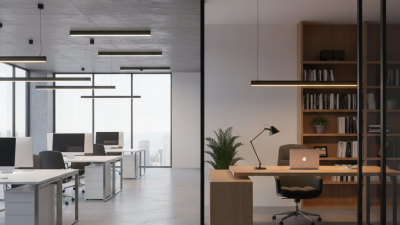
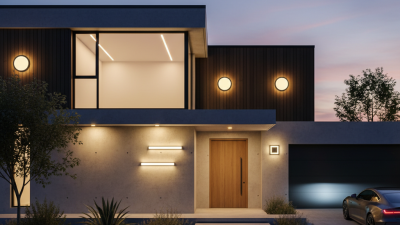
Commercial applications vary widely. Suspended linear fixtures suit meeting rooms and reception areas. Recessed versions create clean ceiling lines in hotels and offices. Surface-mounted models work well where the ceiling cannot be modified. Warehouses may need stronger optics and higher protection against dust. Measure the mounting height first. A layout that looks balanced on paper can still leave dark patches on the floor. Test one section before full installation, then compare measured lux levels with the task requirements.

Market Context: Lighting Uses About 15% of Global Electricity (IEA)

Why Choose LED Linear Light for Your Business?

Lighting uses about 15% of global electricity, according to the International Energy Agency. That figure gives businesses a practical reason to examine every illuminated space. In a shop, office, warehouse, or school, linear fixtures can spread light across long surfaces with fewer dark gaps. Better distribution may reduce the need for excessive brightness.

The benefit is measurable. A lighting audit can record fixture wattage, operating hours, and electricity rates. For example, replacing ten 80-watt fluorescent fixtures with 40-watt LED linear lights can save 400 watts during operation. Used for ten hours daily, that equals four kilowatt-hours saved each day. Actual results depend on controls, installation quality, and local tariffs.

Small details matter. Diffusers can reduce glare near computer screens. Continuous rows can make aisles easier to inspect. Dimming sensors may lower consumption when daylight enters through windows. The calculation is not always tidy. A poorly chosen color temperature can make products look unnatural. An incorrect mounting height can create shadows. Professional planning, photometric testing, and compliance with local electrical standards improve reliability. Maintenance teams should also check heat management, driver performance, and access for future repairs. LED is efficient, but it is not automatically the right answer for every room.

Why Choose LED Linear Light for Your Business? - Market Context: Lighting Uses About 15% of Global Electricity (IEA)

Business lighting comparison based on commonly reported performance ranges
Evaluation Dimension LED Linear Light Linear Fluorescent Light Incandescent / Halogen Light Business Relevance
Typical luminous efficacy Approximately 80–150 lm/W Approximately 60–100 lm/W Approximately 10–24 lm/W Higher efficacy can deliver the required illumination with less electricity.
Expected service life Typically 25,000–50,000 hours Typically 7,000–20,000 hours Typically 1,000–4,000 hours Longer life can reduce relamping frequency and maintenance disruption.
Warm-up and restart Instant start and restart May require warm-up; restart performance can vary Instant start and restart Suitable for occupancy sensors, frequent switching, and automated controls.
Dimming and controls Broad control options when compatible drivers are used Requires compatible ballast and control equipment Dimming is generally straightforward, but efficiency is low Controls can reduce operating hours and unnecessary energy use.
Mercury content No mercury in the light-emitting device Contains mercury and requires responsible recycling No mercury in the lamp Waste-handling requirements may be simpler for LED products.
Heat generation Lower heat output per lumen than incandescent lighting Moderate High Lower heat loads can support comfort and may reduce cooling demand.
Directional light control Good optical control with suitable lenses and reflectors Moderate; depends on fixture and reflector design Limited without additional optics Better distribution can improve uniformity and reduce wasted light.
Illustrative annual energy use* 400 kWh at 40 W 800 kWh at 80 W 2,000 kWh at 200 W Illustrates potential savings when equivalent lighting output is achieved.
Alignment with the global market context Strong potential to reduce lighting electricity demand More efficient than incandescent lighting, but generally less efficient than modern LED systems High electricity consumption for the amount of light produced The International Energy Agency reports that lighting accounts for about 15% of global electricity consumption, making efficiency improvements commercially significant.
Calculation note: The illustrative annual energy figures assume 10 hours of operation per day for 250 days per year. Actual consumption depends on installed wattage, operating schedule, controls, light levels, and maintenance conditions.
Sources: International Energy Agency (IEA), Lighting; U.S. Department of Energy, LED Lighting and Energy Saver resources; U.S. Environmental Protection Agency, Compact Fluorescent Light Bulbs guidance. Performance ranges are general technology ranges and may vary by product design and operating conditions.

Energy Efficiency: LEDs Use at Least 75% Less Energy (U.S. DOE)

Why Choose LED Linear Light for Your Business?

Energy Efficiency: LEDs Use at Least 75% Less Energy (U.S. DOE)

Energy consumption quickly becomes visible on a commercial electricity bill. The U.S. Department of Energy reports that LED lighting uses at least 75% less energy than incandescent lighting. It can also last up to 25 times longer. For a business operating 12 hours daily, this difference can reduce both power demand and replacement work.

Consider a corridor with twenty equivalent 100-watt incandescent lamps. A comparable LED solution may require roughly 25 watts per lamp, depending on the design. That change could save about 18 kilowatt-hours daily across the installation. The U.S. Energy Information Administration identifies lighting as a significant electricity use in commercial buildings, making efficiency improvements operationally meaningful.

75% less energy

The difference is measurable. Lower wattage can also reduce heat released into occupied spaces. This may ease cooling demand during warm seasons, although the actual reduction depends on climate and HVAC performance. Linear fixtures can provide more even illumination across shelves, workstations, and long aisles. That matters when staff inspect labels or move safely through storage areas.

Still, check the numbers. Poor optical design, excessive brightness, or unnecessary operating hours can weaken the benefit. A professional audit should compare delivered lumens, controls, maintenance costs, and expected service life. The DOE’s 75% figure uses incandescent lighting as the baseline, not every existing fluorescent system. Real savings therefore vary. A careful comparison is better than a convenient promise.

Service Life: LEDs Can Last Up to 25 Times Longer (U.S. DOE)

Why Choose LED Linear Light for Your Business?

Service Life: LEDs Can Last Up to 25 Times Longer (U.S. DOE)

For a business, lighting failure is more than an inconvenience. It can interrupt production, reduce visibility, and require lift equipment for replacement. The U.S. Department of Energy reports that LED lamps can last up to 25 times longer than incandescent lamps. This difference can mean fewer service visits above aisles, counters, and warehouse shelving.

An LED linear light rated for 50,000 hours could operate for over 11 years at 12 hours daily. Actual results depend on heat, voltage, driver quality, and operating schedules. The DOE’s solid-state lighting research also identifies thermal management as a major factor in LED performance. A cool aluminum housing matters. So does proper installation.

Long life is not automatic.

The ENERGY STAR lighting specification evaluates factors such as lumen maintenance, color quality, and operating performance. These measures help buyers compare products beyond the initial price. Still, rated life is a laboratory estimate, not a guarantee for every building. Dust, high temperatures, frequent switching, or poor ventilation may shorten service life.

In practical use, a well-designed linear fixture can keep corridors, workstations, and retail shelves consistently lit for years. Maintenance teams spend less time changing lamps and more time managing the facility. That benefit is easy to overlook. It should not be. A lower replacement frequency can also reduce waste and limit disruptions during busy business hours.

Light Quality: CRI, CCT, UGR, and Visual Comfort in Workspaces

Why Choose LED Linear Light for Your Business?

LED linear lights can improve workspace quality when their optical data is specified carefully. The International Energy Agency reported that LEDs represented more than half of global lighting sales in 2022. Efficiency matters, but visual comfort matters more during an eight-hour shift. A high CRI, preferably 90 or above, helps employees distinguish skin tones, printed colors, and product details. CRI alone is imperfect. IES TM-30 gives a fuller view through fidelity and gamut metrics.

CCT shapes the room’s character. Around 4000K often feels alert and neutral in offices, while warmer settings may suit reception areas. However, one color temperature cannot fit every task. UGR should also remain controlled. EN 12464-1 commonly recommends UGR ≤19 for office work. Poorly shielded lenses can reflect across a monitor, causing squinting and headaches. Linear optics, deeper diffusers, and careful spacing can reduce those bright patches. The CIE 117 glare method supports comparing installations more consistently.

Tips: Test a full-size mock-up beside real desks. Check CRI, TM-30, CCT, flicker, and UGR together. Measure from seated eye level, not only from the floor. Review the result after several working days. It may look excellent on paper and still feel tiring. That uncomfortable finding is useful. Avoid choosing by wattage alone; ask for photometric files, maintenance data, and independent test reports。

Smart Operation: Dimming and Occupancy Sensors Reduce Lighting Demand

Why Choose LED Linear Light for Your Business?

Smart operation turns LED linear lighting into an active energy-management tool. Dimming reduces output when daylight reaches a workbench or corridor. Occupancy sensors switch fixtures down when rooms become empty. In a meeting room, the lights should not remain fully bright for an abandoned chair.

The U.S. Department of Energy reports that LED products can use at least 75% less energy than incandescent lighting. Its commercial lighting guidance also identifies controls as a major source of additional savings. A Lawrence Berkeley National Laboratory review found occupancy-based controls can reduce lighting energy use by roughly 10% to 40%, depending on room activity and sensor settings. Results vary.

In practice, a linear system can pair low-level Standby Lighting with motion detection. A warehouse aisle may brighten only when a worker approaches. Open offices can use daylight sensors near windows and lower output deeper inside the floor plan. This creates fewer harsh contrasts and may improve visual comfort.

Installation quality matters. Poor sensor placement can cause delayed activation, false shutoffs, or lights that never dim. Staff may then disable the controls, wasting the intended benefit. Facility teams should review occupancy patterns, set practical timeout periods, and measure electricity use after commissioning. A small pilot room often exposes problems faster than a whole-building rollout. Metrics can reveal an uncomfortable truth: efficient hardware cannot compensate for careless programming.

Why Choose LED Linear Light for Your Business?

Smart Operation: Dimming and Occupancy Sensors Reduce Lighting Demand

The indexed lighting-demand profile shows how automatic dimming and occupancy-based control can reduce electricity use compared with fixed-output lighting. Combining both controls can lower lighting demand substantially while maintaining light when and where it is needed. Actual savings vary by space usage, daylight availability, and operating schedules.

Business Value: Payback, Maintenance Savings, and DLC Qualification

Why Choose LED Linear Light for Your Business?

LED linear lighting can improve a business budget without changing daily operations. A warehouse using older fluorescent fixtures may run lights for 12 hours each day. Replacing them with efficient LED linear fixtures can reduce electricity use and lower monthly operating costs. The actual payback depends on wattage, energy rates, operating hours, installation costs, and available rebates. Do the calculation carefully.

Maintenance savings often become visible after the first year. LEDs typically require fewer lamp replacements, which reduces lift rentals, labor hours, and interruptions. In a retail aisle, for example, staff can avoid closing an area to replace failed lamps. Better light distribution may also reduce dark zones and improve working conditions. Still, poor installation can create glare or uneven brightness. That needs attention.

DLC qualification can strengthen a project’s financial case. Eligible products may support utility rebate applications, but qualification is not automatic for every fixture. Check the current listing, performance data, warranty terms, and project requirements before ordering. An experienced lighting contractor can verify photometric files and confirm whether the proposed layout meets local standards. Rebate rules change. Leave room for that uncertainty.

A sensible evaluation compares five-year energy costs, maintenance records, installation labor, and expected rebates. It should also consider controls, ceiling height, and replacement access. The cheapest fixture may not deliver the fastest payback. Sometimes, better planning matters more.

FAQS

: Why should a business consider LED linear lighting?

: It spreads light across long surfaces, reducing dark gaps in shops, offices, warehouses, and schools. Better distribution may reduce excessive brightness. Results still depend on planning.

How much energy can LED linear lighting save?

Replacing ten 80-watt fluorescent fixtures with ten 40-watt fixtures saves 400 watts during operation. At ten hours daily, that equals four kilowatt-hours saved each day. Actual savings vary with controls, installation, and electricity rates.

Can lighting controls reduce energy use further?

Yes. Dimming lowers output when daylight reaches work areas. Occupancy sensors reduce lighting when rooms become empty. Savings depend on settings and room activity.

How could sensors work in a warehouse?

Fixtures can remain at low standby brightness in empty aisles. Motion detection raises output when a worker approaches. Poor placement may cause delayed activation or false shutoffs.

Can linear lighting improve visual comfort?

Diffusers can reduce glare near computer screens. Continuous rows may make aisles easier to inspect. Daylight sensors can reduce harsh contrasts near windows.

What problems can poor lighting design create?

Incorrect color temperature may make products look unnatural. Incorrect mounting height can create shadows. A technically efficient fixture may still perform badly.

How should a business test a new lighting system?

Start with a small pilot room before changing the entire building. Record fixture wattage, operating hours, electricity rates, and sensor behavior. Measure after commissioning. Numbers may surprise you.

What maintenance does LED linear lighting require?

Teams should check heat management, driver performance, diffuser condition, and repair access. Controls also need periodic review. Efficient hardware cannot fix careless programming.

Conclusion

Led Linear Light offers businesses an efficient, flexible, and visually comfortable solution for commercial illumination. Its streamlined structure and controlled optics support a wide range of applications, including offices, retail spaces, schools, warehouses, and public facilities. Since lighting accounts for about 15% of global electricity use, improving lighting efficiency can significantly reduce operational costs. LED technology uses at least 75% less energy than traditional lighting and can last up to 25 times longer, helping businesses lower electricity consumption, replacement frequency, and maintenance expenses.

Beyond efficiency, a well-designed Led Linear Light system can improve workplace comfort through suitable color rendering, color temperature, glare control, and uniform light distribution. Dimming functions and occupancy sensors can further reduce unnecessary lighting demand by adjusting output according to activity and available daylight. With potential energy savings, reduced maintenance, improved visual quality, and possible qualification for efficiency programs, LED linear lighting can deliver a strong long-term return on investment for modern businesses.
Sophia

Sophia

Sophia is a dedicated marketing professional at Foshan Kaili Lighting Technology Co., Ltd., a leading Chinese enterprise in emergency and green lighting solutions since its establishment in 2004. With a profound expertise in the company’s innovative products, she plays a vital role in showcasing......
Previous What are the Benefits of Using Led Linear Light in Your Space?