Leave Your Message
Picking out the right Emergency Exit Lights in 2026 isn’t just about comparing how bright they are, how much they cost, or what they look like. Folks buying across the globe need to think about things like battery life, how far the sign can be seen, installation conditions, and how easy it is to maintain. A good exit sign should be visible even when there’s smoke, no lights, or crowded hallways. Plus, it needs to give clear directions during those sudden power outages we all hope never happen.
In this guide, I’ve looked at the top products using practical criteria that facility managers, electricians, and safety experts actually rely on. We focus on things like LED efficiency, how tough the housing is, how long it takes to charge, emergency run time, and the test features. Battery Backup Emergency Exit Lights deserve some extra attention because their performance really depends on factors like the battery chemistry, temperature, charging controls, and how easy it is to find replacements. Just because a sign is bright doesn’t automatically mean it’s reliable.
Details really do make a difference.
Sometimes, what you see in product brochures doesn’t match real-world conditions. An Emergency Light might work perfectly in a dry showroom but fall short in a dusty warehouse or a humid hotel corridor. Buyers should double-check local certification standards, voltage compatibility, mounting options, warranty coverage, and after-sales support before placing an order, especially if it’s from overseas. Since requirements vary across regions, it’s always good to get a professional opinion to make sure everything lines up.
This overview compares options suitable for offices, factories, hotels, schools, retail spaces, and transportation hubs. It also points out some common pitfalls—like making assumptions that one product fits all or that advertised battery life is always accurate. Some models seem budget-friendly until you add in the costs for replacement parts, testing, or importing. The best choice balances good visibility, durability, ease of maintenance, and proven performance. No single product is perfect for every building. So, taking your time and choosing carefully beats relying solely on marketing hype.
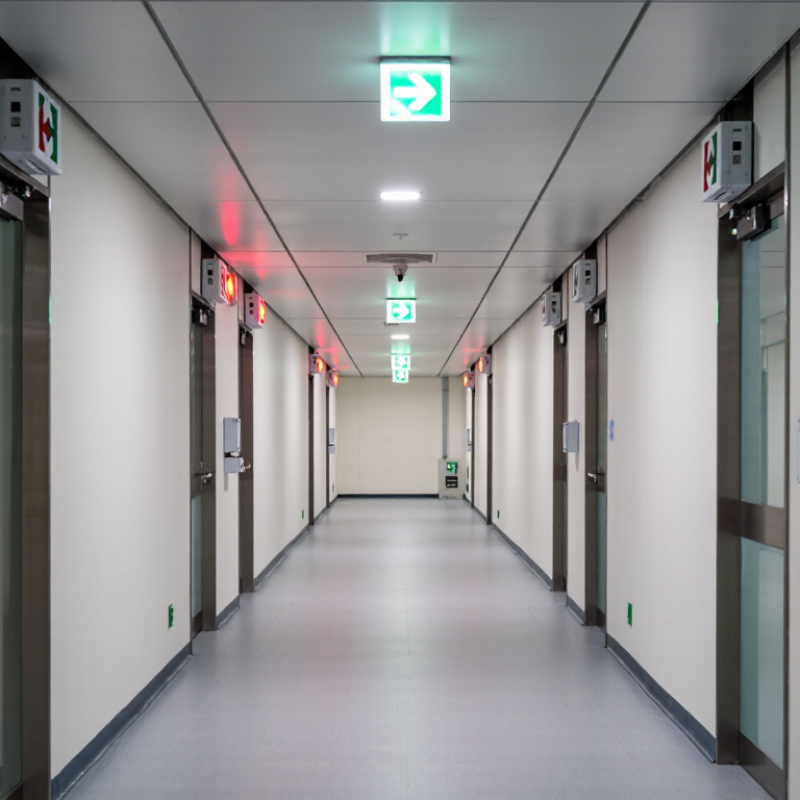
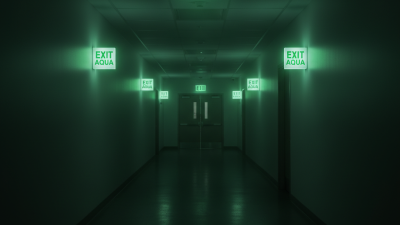
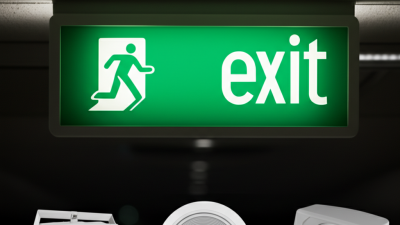
Emergency Exit Lightsare life-safety devices, not decorative fixtures. They mark escape routes when smoke, fire, or a power failure removes normal visibility. Exit Signs identify the direction, while emergency luminaires illuminate stairs, corridors, doorways, and changes in floor level. A dark stairwell can turn a simple evacuation into a dangerous pause.
NFPA’s Fire Loss in the United States During 2023 estimated 1,388,500 fires and 3,670 civilian fire deaths. These figures explain why dependable evacuation systems matter beyond paperwork. NFPA 101, 2024 edition, generally requires emergency lighting to operate for at least 90 minutes. OSHA also requires exit routes to remain adequately lighted. Requirements differ across regions, so global buyers should verify local approvals and installation rules.
A practical inspection should check brightness, battery condition, charging time, and arrow visibility. Test the unit during a simulated power cut, not only with its indicator lamp. A green sign may look convincing while its battery is already failing. Choose visible optics, durable housings, and readable signs from several viewing angles. Humid warehouses need better sealing than dry offices. Cold storage adds another challenge.
The weak point is often maintenance. NFPA data describes fire losses, but it cannot measure every failed light before evacuation. That gap deserves reflection. A reliable Emergency Exit Lights program combines certified equipment, documented testing, clear mounting, and trained facility staff. Even a small blocked sign can delay a crowded exit.
Emergency exit lights are electrically powered luminaires and illuminated signs that identify escape routes and exits when normal lighting fails. The comparison below focuses on commonly specified product types and purchasing criteria rather than company or brand information.
| Emergency Exit Light Type | Typical Application | Light Source | Normal Supply | Emergency Duration | Battery Technology | Typical Protection Rating | Installation Method | Main Advantages | Key Buying Considerations |
|---|---|---|---|---|---|---|---|---|---|
| Maintained LED Exit Sign | Public buildings, offices, retail stores, hotels and transport facilities where the exit message must remain visible continuously. | LED; typically designed for low energy consumption and long service life. | Commonly 220–240 V AC or 120 V AC, depending on the market. | 1–3 hours typical | Rechargeable lithium-ion or nickel-metal hydride; nickel-cadmium may still be specified in some applications. | Usually IP20–IP44 for indoor areas. | Wall, ceiling, suspended or recessed mounting; optional double-sided versions. | Highly visible at all times, efficient LED operation and straightforward wayfinding. | Check viewing distance, arrow configuration, local sign requirements, battery replacement access and charging time. |
| Non-Maintained LED Emergency Light | Corridors, stairways, escape routes and open areas where the luminaire operates only when normal power fails. | LED emergency luminaire, commonly with a wide or focused beam optic. | Commonly 220–240 V AC or 120 V AC, depending on the market. | 1–3 hours typical | Rechargeable lithium-ion, nickel-metal hydride or nickel-cadmium, depending on specification and region. | Usually IP20–IP44 indoors; higher ratings are available for demanding locations. | Surface, recessed, wall or ceiling mounting. | Lower everyday energy use and suitable for route illumination rather than continuous signage. | Verify maintained or non-maintained operating mode, emergency lux coverage, test method and battery end-of-life indication. |
| Combined Exit Sign and Emergency Luminaire | Locations requiring both an illuminated exit message and emergency illumination from one fitting. | LED sign panel plus emergency light optics. | Typically mains-powered with automatic battery charging. | 1–3 hours typical | Rechargeable lithium-ion or nickel-metal hydride; chemistry should match the required operating temperature. | Commonly IP20–IP44 for indoor use. | Wall, ceiling, recessed or suspended installation. | Saves installation space and can reduce the number of separate fixtures. | Confirm that the sign and escape-route illumination both meet the applicable local requirements and photometric design. |
| High-Output Emergency Floodlight | Warehouses, workshops, industrial premises, large open areas and high-ceiling spaces. | High-efficiency LED with wide-area or asymmetric distribution. | Typically 220–240 V AC or 120 V AC with an internal emergency driver. | 1–3 hours typical | Rechargeable lithium-ion or nickel-metal hydride; larger packs may be used for extended duration. | Often IP54–IP65 for dusty or damp industrial environments. | Surface, wall, ceiling, conduit or bracket mounting. | Higher emergency illumination and better coverage for large or high-bay spaces. | Review lumen output, beam angle, mounting height, ambient temperature, impact resistance and photometric calculations. |
| Weather-Resistant Emergency Exit Sign | Covered outdoor paths, external escape routes, car parks and semi-exposed building areas. | LED with sealed sign or diffuser construction. | Typically mains-powered with automatic emergency changeover. | 1–3 hours typical | Rechargeable lithium-ion or nickel-metal hydride, subject to temperature limits. | IP54–IP66 typical | Wall, ceiling, suspended or bracket mounting with suitable cable glands. | Improved resistance to water and dust compared with standard indoor fittings. | IP rating alone does not confirm impact resistance; also check UV resistance, corrosion protection and operating temperature. |
| Central-Battery Emergency Light | Large commercial, healthcare, infrastructure and multi-zone facilities with centralized emergency-power management. | LED luminaire or exit sign designed for a central emergency supply. | Normal mains supply plus a separate central battery system; system voltage varies by design. | Project-defined | Central battery bank, commonly based on valve-regulated lead-acid, lithium-ion or other engineered battery systems. | Fixture rating commonly IP20–IP65, selected by location. | Fixed wiring, wall, ceiling, recessed or suspended installation. | Centralized testing, easier site-wide monitoring and potentially simpler luminaire-level maintenance. | Requires system design, compatible wiring, backup capacity calculations, fire compartment coordination and qualified commissioning. |
| Self-Contained Emergency Exit Light with Self-Test | Sites seeking automatic testing and reduced manual inspection work. | LED exit sign or emergency luminaire with electronic monitoring. | Normal mains supply with automatic battery charging. | 1–3 hours typical | Rechargeable lithium-ion or nickel-metal hydride with electronic battery monitoring. | Typically IP20–IP44 indoors; higher ratings are available. | Wall, ceiling, recessed or suspended installation. | Automatic functional and duration-test scheduling can improve maintenance records. | Confirm test frequency, fault indication, data logging, communication compatibility and accessibility for servicing. |
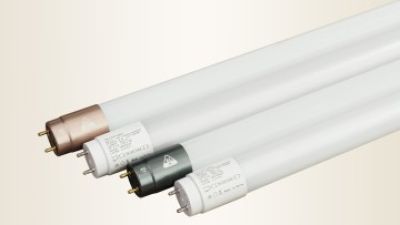
T8 LED tube lights provide an energy-efficient solution for modern commercial and industrial lighting. Designed to deliver clear, consistent illumination while using less electricity than traditional fluorescent tubes, they can help reduce ongoing energy consumption and maintenance requirements. Their efficient LED technology produces bright, comfortable light for offices, retail spaces, warehouses, workshops, schools, and other high-use environments, supporting visibility and productivity throughout the day.
Available in 1.5 m, 1.2 m, and 0.6 m lengths, these tubes offer flexible options for different fixtures, ceiling layouts, and room sizes. The 1.5 m version is well suited to large industrial areas and open commercial spaces, while the 1.2 m model fits common office and retail installations. The compact 0.6 m tube works effectively in smaller rooms, display areas, corridors, and under-cabinet applications. With durable construction and dependable performance, T8 LED tubes are designed to withstand regular operation while maintaining stable brightness and a clean, modern appearance. Their practical design makes it easier to upgrade existing lighting systems and create well-lit spaces with improved efficiency.
Non-maintained, self-contained LED units often suit regularly occupied spaces. They stay off normally and activate during a power failure. Simple, but not perfect.
Their signs remain illuminated during normal operation. This helps visitors follow routes through busy corridors and unfamiliar rooms. A steady pictogram matters.
Hospitals may need central batteries for coordinated testing across corridors, treatment rooms, and evacuation areas. Local requirements still need checking. Assumptions can fail.
High-output emergency luminaires help illuminate routes below tall storage racks. Dusty areas need regular lens cleaning. Brightness alone cannot correct poor placement.
Many occupied buildings require at least 90 minutes of emergency illumination. Test batteries under real load, not only through a visual check. A bright sign may still have weak backup power.
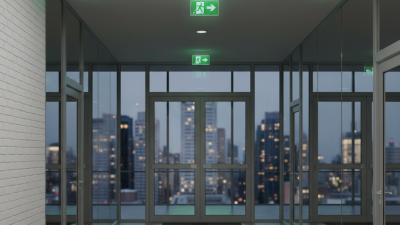
Install them where smoke, shelving, or open doors cannot block viewing angles. Check visibility at eye level and illumination near the floor. Look beyond the plan.
Test each unit monthly and record failures, battery dates, and inspection results. Perform a longer annual discharge test according to local rules. Records reveal patterns.
Heat, water, poor thermal control, corrosion, and loose connections can cause failures. Keep fittings away from hazards unless their enclosures are properly rated. Recheck after renovations.
This guide to 2026 Top Emergency Exit Lights for Global Buyers explains why Emergency Exit Lights are essential for safe evacuation in offices, factories, schools, hotels, hospitals, and public facilities. It covers how these systems automatically switch to battery power during outages, keep exit routes visible, and support orderly movement when normal lighting fails. Readers will also learn about suitable options for different building layouts, including maintained and non-maintained designs, wall-mounted signs, ceiling units, and combined emergency lighting systems.
For international purchasing decisions, the guide highlights the importance of checking applicable safety standards, certification requirements, operating temperature, brightness, viewing distance, battery capacity, and expected backup duration. It also explains how installation position, clear visibility, routine testing, battery replacement, cleaning, and periodic maintenance affect long-term reliability. By comparing performance, compatibility, durability, and total operating needs, buyers can select emergency lighting solutions that improve safety and remain dependable during unexpected power interruptions.




 Phone
 Send Email
 whatsapp