Leave Your Message
Picking out Emergency Fire Lightsfor global sourcing isn’t just about buying something cheap – it’s really about safety. A budget-friendly unit might seem fine at first but could totally fail when smoke, heat, or darkness block those usual escape cues. According to reports from NFPA, fire incidents in the US are still a big deal when it comes to lives at risk. Meanwhile, studies from places like Grand View Research and Fortune Business Insights show that demand for Emergency Lighting keeps growing, especially in commercial buildings, warehouses, transportation hubs, and with safety standards getting tougher all the time.
Barry Dixon, a tech specialist involved with the Industry Committee for Emergency Lighting, puts it simply: “The real test of emergency lighting isn’t how cool it looks during normal operations, but how it performs when things go wrong.” It’s a point that’s often overlooked. Whenever you’re talking to suppliers, keep this in mind. You should be asking for verified lumen output, battery life, how it charges, weather resistance, performance in various temperatures, and proper testing records—don’t just settle for pretty pictures of the product.
And let’s not forget, standards really matter. Things like IEC 60598-2-22, EN 1838, and local fire safety rules can all come into play. That said, certifications can sometimes be confusing or misinterpreted, especially when trying to compare across different markets. The certificate should clearly match the exact model, including battery setup, factory info, and production date. It’s always a good idea to look into factory audits, sample testing, and quality records that you can trace back. Oh, and nothing beats real-world experience—something tested in a clean showroom might act pretty differently in a dusty warehouse or humid coastal environment.
No sourcing checklist can catch everything though. Human mistakes, incomplete paperwork, or shifts in regulations can still lead to gaps. That’s why savvy buyers compare technical data, supplier track records, installation environments, and after-sales support before giving the green light for international emergency fire light deployments.
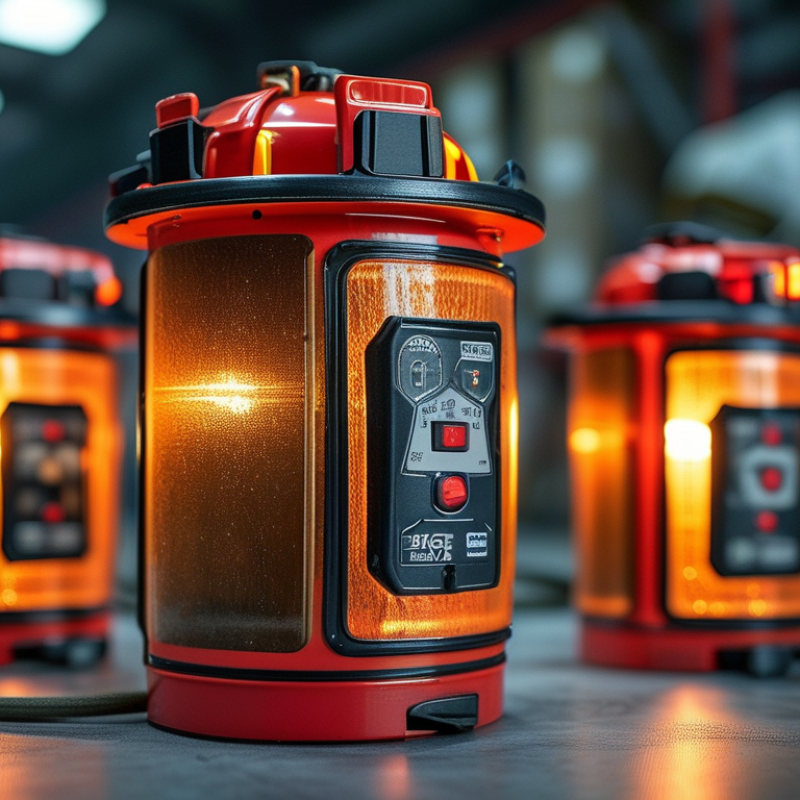
Emergency Fire Lights are life-safety equipment, not ordinary building fixtures. Their role is to guide people toward safe exits when normal lighting fails.Fire Exit Lights should remain visible through smoke, darkness, and crowded conditions. They also help identify stairs, changes in floor level, fire equipment, and final exit doors.
Define the site before contacting suppliers. A warehouse may need ceiling units, wall signs, and rugged housings near loading areas. A hotel corridor may require discreet fixtures with clear directional arrows. Check the required operating duration, battery type, charging time, brightness, viewing distance, and temperature range. Confirm compatibility with local voltage and frequency. Small details matter.
During a site walk, stand at the farthest point from each exit. Can the sign be seen behind a column? Is the arrow still clear from the stair landing? These simple checks often reveal weak planning. I once underestimated glare from polished flooring; the sign looked bright, yet its message became difficult to read. That mistake deserves attention. Ask for test records, installation guidance, maintenance instructions, and replacement-part availability. Verify applicable local safety requirements before production, because one universal specification rarely fits every market.
Procurement reference table for emergency lighting and fire-safety applications
| Evaluation Dimension | Recommended Requirement or Typical Data | Role in Fire and Emergency Safety | Global Sourcing Verification Points | Priority |
|---|---|---|---|---|
| Primary function | Provide illuminated escape-route signs, open-area lighting, or high-risk-task lighting when the normal power supply fails. | Supports evacuation, reduces panic, improves route visibility, and helps people avoid obstacles or hazardous areas. | Define the application before quotation. A route sign, corridor luminaire, open-area luminaire, and high-risk-task luminaire may require different optical performance and installation positions. | High |
| Emergency operating mode | Automatic changeover from normal supply to battery operation after a power interruption; manual or automatic testing as required by the project. | Maintains safety illumination without relying on the failed normal lighting circuit. | Request documented transfer behavior, test-switch operation, charging indication, fault indication, and recovery behavior after mains power returns. | High |
| Rated emergency duration | Common project requirements are 1 hour or 3 hours; the required duration must follow the applicable local code, building category, and evacuation plan. | Determines how long the luminaire can support evacuation or other emergency activities. | Do not select by battery capacity alone. Verify the complete luminaire’s measured duration at the specified ambient temperature and rated load. | High |
| Emergency light output | Use photometric calculations rather than a single lumen figure. Typical LED emergency luminaires may provide approximately 100–500 lm, depending on optics, mounting height, and application. | Determines whether escape routes, open areas, or hazardous work locations receive adequate illumination. | Request photometric files, beam distribution, mounting-height data, spacing tables, and test results. Check maintained output over the specified battery duration. | High |
| Required illuminance | Values vary by jurisdiction and application. As a common European reference, escape routes are often designed around at least 1 lux on the center line, while open areas may use approximately 0.5 lux in the unobstructed area, subject to the applicable standard. | Provides a measurable basis for evacuation visibility instead of relying only on nominal wattage or lumen output. | Confirm the target lux level with the project consultant or authority having jurisdiction. Verify minimum values, uniformity, and the measurement plane required by the local rules. | High |
| Battery technology | Common options include nickel-metal hydride and lithium-based batteries. Battery voltage, capacity, protection circuit, expected life, and replaceability must be specified. | Battery condition directly affects emergency duration, charging reliability, maintenance, and product life. | Request battery datasheets, cycle or life information, charging time, low-temperature performance, transport classification where applicable, and replacement instructions. | High |
| Charging and recharge time | Many emergency luminaires require approximately 12–24 hours for a full recharge, but the exact time depends on battery type and charger design. | Ensures the product can recover its required emergency capacity after a power interruption. | Check whether the stated duration is available after a full charge or partial recharge. Request charging-current limits, overcharge protection, and recharge test records. | Medium |
| Self-contained or central-battery system | Self-contained units include their own battery; central-battery systems receive emergency power from a shared battery installation. | System architecture affects monitoring, maintenance, wiring, fault response, and emergency power capacity. | Define the system type, cable requirements, circuit monitoring method, maximum circuit length, voltage compatibility, and commissioning responsibilities. | High |
| Electrical input compatibility | Common supply ranges include 220–240 V AC at 50 Hz and 110–120 V AC at 60 Hz, depending on the destination market. Some products support a wider input range. | Correct electrical compatibility prevents unsafe operation, nuisance failures, and non-compliance at the installation site. | Specify nominal voltage, frequency, power factor, inrush current, terminal type, wiring method, and allowable voltage tolerance for each target country. | High |
| Ingress protection | Indoor dry locations may use lower IP ratings, while dusty, damp, wash-down, or outdoor areas commonly require IP65 or higher, subject to the installation environment. | Protects electrical and optical components against dust and water ingress that could cause failure during an emergency. | Match the IP rating to the actual environment. Confirm whether the rating applies to the complete installed luminaire, cable entries, connectors, and battery compartment. | High |
| Impact resistance | Indoor commercial applications may use a moderate impact rating, while public, industrial, sports, or vandal-prone areas may require IK08–IK10 or the local equivalent. | Maintains the integrity of the enclosure, diffuser, and emergency circuit under accidental or deliberate impact. | Verify the impact rating for the complete enclosure and diffuser. Check whether the test configuration matches the intended mounting orientation. | Medium |
| Operating temperature | A common indoor range is approximately 0°C to 40°C; cold stores, plant rooms, car parks, and outdoor installations may require a wider range. | Temperature affects battery capacity, charging behavior, LED output, and service life. | Request tested emergency duration at the lowest and highest specified temperatures. Confirm battery chemistry suitability for the destination climate. | High |
| Fire and heat resistance | Use flame-retardant enclosure materials and construction suitable for the intended building and installation environment. Cable and wiring requirements may be project-specific. | Reduces the risk of the luminaire contributing to fire spread and supports continued operation where required by the emergency design. | Request material flammability information, thermal test data, cable temperature ratings, and any required fire-resistance or circuit-integrity documentation. | High |
| Exit sign visibility | For internally illuminated signs, viewing distance is commonly determined by sign height, letter or pictogram geometry, contrast, and local code; a single universal distance should not be assumed. | Allows occupants to identify escape directions and exits in smoke-reduced visibility or loss-of-power conditions. | Confirm pictogram format, arrow direction, viewing distance, legend dimensions, mounting orientation, double-sided requirements, and local accessibility rules. | High |
| Self-test and monitoring | Options include manual testing, automatic self-test, remote monitoring, and centralized fault reporting. | Helps identify battery, charger, LED, power-supply, or circuit faults before an emergency occurs. | Define test frequency, fault codes, indicator colors, data interface, reporting protocol, and compatibility with the building-management or emergency-lighting monitoring system. | Medium |
| Photometric and color performance | LED sources are commonly selected with a color temperature between approximately 3000 K and 6500 K, depending on visual comfort and project requirements. | Adequate color rendering and controlled glare improve route recognition and obstacle visibility. | Request measured lumen output, color temperature tolerance, color-rendering data, glare information, optical distribution, and LED lifetime conditions. | Medium |
| Installation method | Typical options include ceiling, wall, recessed, suspended, flag, and surface mounting. Remote battery or central-supply configurations may require additional wiring. | Correct positioning ensures the required escape-route coverage and maintains visibility of signs and hazards. | Specify mounting height, ceiling type, wall construction, cable entry direction, fixing accessories, maintenance clearance, and installation instructions. | High |
| Maintenance and serviceability | Prefer accessible battery and driver components, clear fault indicators, replaceable parts where permitted, and documented inspection procedures. | Regular inspection and timely replacement help preserve emergency performance throughout the building’s service life. | Request expected battery replacement interval, spare-part availability, disassembly procedure, torque requirements, cleaning instructions, and maintenance records format. | Medium |
| Compliance documentation | Documentation should cover applicable emergency-lighting, electrical-safety, EMC, photometric, environmental, and fire-related requirements for the destination market. | Provides evidence that the product has been evaluated against relevant technical and legal requirements. | Obtain test reports, declarations of conformity, certificates where required, product labels, installation manuals, wiring diagrams, and traceable model information. Check validity and scope. | High |
| Quality-control plan | Include incoming-material inspection, electrical safety testing, battery checks, charging tests, emergency-duration sampling, visual inspection, and final functional testing. | Reduces the risk of inconsistent output, incorrect wiring, defective batteries, and shipment-related failures. | Agree on approved samples, critical-to-quality dimensions, inspection level, acceptance criteria, defect classification, lot traceability, and pre-shipment inspection records. | High |
| Packaging and international logistics | Use protection against impact, moisture, electrostatic damage, and diffuser scratching. Battery-containing shipments may require specific transport documents or labeling. | Protects the luminaire and battery from damage or regulatory delays during international transportation. | Confirm carton dimensions, gross weight, palletization, drop-test expectations, battery transport classification, labeling, customs documents, and destination-specific packaging rules. | Medium |
| Total cost of ownership | Evaluate purchase price together with installation, energy use, battery replacement, testing labor, spare parts, warranty handling, and disposal costs. | A lower initial price may create higher maintenance costs or shorter service life. | Compare products using the same emergency duration, output, ingress rating, battery life, warranty terms, service access, and documentation scope. | High |
Important: Emergency-lighting performance and fire-safety requirements differ by country, building type, and authority having jurisdiction. Final selection should be checked against the current local regulations, project specifications, and verified test documentation.
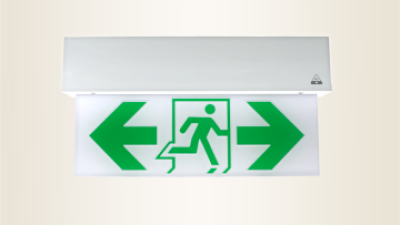
The Model P450ZY220L033V6-10C is a 450 surface-mounted emergency exit sign designed to provide clear directional guidance during power interruptions or other evacuation situations. Its energy-efficient LED illumination helps maintain visible exit markings while reducing power consumption and routine maintenance needs. The surface-mounted format offers a practical solution for corridors, stairwells, public buildings, offices, retail spaces, schools, and other facilities where reliable emergency wayfinding is essential.
Key features include a highly visible exit display, a compact housing suitable for wall or ceiling installation, and dependable illumination intended to support safe movement through indoor routes. Before installation, confirm the required viewing direction, mounting height, electrical supply, and local emergency-lighting requirements. Select a position that remains unobstructed by doors, signs, furniture, or decorative structures, ensuring that the exit symbol can be seen clearly from the approaching pathway.
For installation, isolate the power supply and prepare a secure, level mounting surface. Route the wiring through the designated entry point, connect the unit according to the supplied electrical instructions, and fasten the housing firmly with suitable hardware. After restoring power, check the illuminated sign, charging function, indicator status, and emergency operation using the approved test procedure. Regular inspections should verify that the sign remains clean, firmly mounted, unobstructed, and ready to guide occupants when normal lighting is unavailable.
They guide people toward safe exits when normal lighting fails. They also mark stairs, floor changes, equipment, and final exit doors. Visibility matters during smoke, darkness, and crowding.
Stand at the farthest point from each exit. Check visibility behind columns and from stair landings. Polished floors can create glare. Bright is not always readable.
Maintained signs stay illuminated during normal power and outages. Non-maintained signs activate only when the main supply fails. Switched maintained operation allows normal lighting control while preserving emergency function.
Self-contained units use internal batteries near doors or stairwells. They simplify installation but require regular battery checks. Central-battery systems use one shared backup source. They suit larger sites but need careful cable planning.
Confirm operating duration, battery type, charging time, brightness, viewing distance, and temperature limits. Check voltage and frequency compatibility. A cold warehouse may need different battery performance than a heated office.
Request samples, test records, installation instructions, and photometric data. Test a sample on a dark staircase. Look for glare, shadows, weak arrows, and poor floor-level illumination. Catalogue images can mislead.
Request factory records, recent test reports, production photos, and component traceability details. Check battery capacity, insulation, burn-in testing, and final inspection documents. Vague promises are not enough.
Options may include voltage, connectors, casing color, language, beam pattern, and emergency duration. Confirm whether changes require new tooling or safety validation. Extra customization can help installation, but it can also create delays.
Approve a pre-production sample with final artwork and dimensions. Inspect battery connectors, mounting strength, labels, and charging indicators. One clean prototype is not proof. Include factory inspections before shipment.
Choosing Emergency Fire Lights for global sourcing requires a clear understanding of the facility’s risks, layout, occupancy, and evacuation needs. Start by defining where the lights will be installed and whether they must provide escape-route illumination, open-area lighting, or fire-alarm guidance. Compare available lighting types and operating modes, including maintained and non-maintained designs, while checking brightness, activation time, visibility, and ease of testing. Safety standards, certifications, and local regulations should be verified for every target market before purchase.
A reliable sourcing plan should also evaluate battery capacity, charging performance, service life, temperature tolerance, moisture resistance, and protection against dust or impact. Assess suppliers through factory audits, quality-control records, sample testing, and production consistency. Discuss customization options such as housing materials, labeling, mounting methods, voltage, and packaging without compromising certified performance. Finally, calculate shipping requirements, installation procedures, spare parts, inspection schedules, and long-term maintenance costs so the selected Emergency Fire Lights remain dependable throughout their service life.




 Phone
 Send Email
 whatsapp