Leave Your Message
Online Inuiry
kl-internationalWhatsApp
StewardAllesGuteWeChat
General Lighting
0%

China has really become a major hub for making all kinds of lighting products—whether it’s for homes, businesses, or smart lighting setups. Their factories are quite the busy bees, handling everything from LED packaging and optical design to driver tech and large-scale assembly. All of this creates a pretty extensive supply network, covering every Ceiling Light category you can think of.

Looking at industry data backs this up too. According to Grand View Research, key trends like energy efficiency, the shift to LED, and smart control systems are really shaping the global lighting market. Mordor Intelligence also points out that connected lighting is growing fast, driven by building automation needs and the push to save energy. That said, there’s a bit of a catch—different reports define things differently. Some focus on fixtures, others on lamps, controls, or entire systems. That’s an important distinction.

Honestly, evaluating Chinese manufacturers shouldn’t just be about how many units they export. It’s equally important to look at things like product certification, photometric testing results, warranty policies, and their experience with big projects. Companies like Opple Lighting, NVC International, PAK Corporation, TCL Lighting, and Foshan Electrical and Lighting Co., Ltd. have definitely made a name for themselves across various market segments. Their strengths vary—one might score higher in smart-home integration, while another might excel in commercial projects or mass retail.

This guide aims to help you get to know the top manufacturers based on practical things like their production capacity, product range, lighting quality, customization options, compliance with international standards, and after-sales support. According to the International Energy Agency, good quality, energy-efficient lighting can really cut down on electricity use, but the actual savings depend a lot on proper installation and how users operate the lights—that’s often overlooked.

Keep in mind, public info about these companies isn’t always consistent. Some are very open with detailed technical data, while others keep things pretty sparse. So, this comparison is meant to help you verify suppliers more carefully—not to replace due diligence. At the end of the day, the best Ceiling Light manufacturer for you is the one that fits your specific needs, budget, and performance expectations.
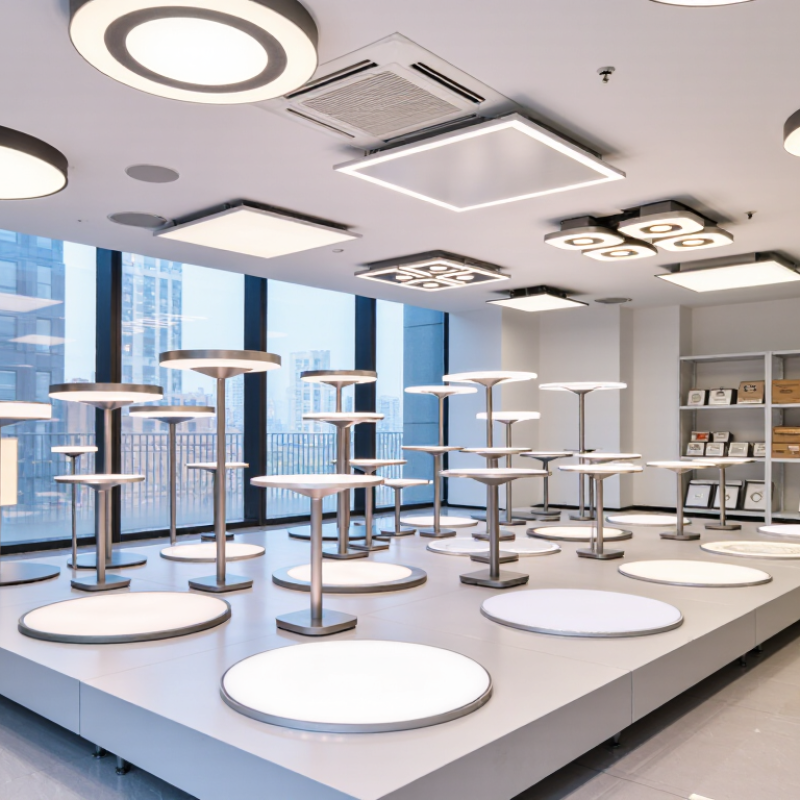
What Are the Top Ceiling Light Manufacturers in China?

Defining China’s Ceiling Light Manufacturing Industry

China’s ceiling light manufacturing industry is defined by scale, specialization, and flexible production. Leading manufacturers often manage design, tooling, assembly, and testing under one supply network. This structure helps buyers request custom sizes, finishes, beam angles, and color temperatures. It also shortens development time for commercial and residential projects.

In supplier evaluations, I look beyond catalogs. A reliable factory should show clear material records, aging-test results, electrical inspection procedures, and stable quality controls. Production floors should be organized, with labeled components and traceable inspection points. A Ceiling Emergency Light requires additional attention to battery performance, charging protection, emergency duration, and installation safety. These details separate a capable manufacturer from a simple trading operation.

No factory is perfect. A polished sample may hide inconsistent batch quality. Buyers should review recent production records and test random units, not only approved samples. Tips: Ask for a factory video, sample test report, component list, and quality agreement. Confirm tolerances in writing. Visit the facility when possible. Small checks prevent expensive surprises. Yet even careful evaluations can miss problems, so continuous inspection remains necessary.

Key Factors for Evaluating Ceiling Light Manufacturers

What Are the Top Ceiling Light Manufacturers in China?

Choosing a ceiling light manufacturer requires more than comparing catalog prices. Production scale matters, but testing discipline matters more. The International Energy Agency reported in 2024 that LED products represent more than half of global lighting sales. This shift increases pressure on suppliers to prove efficiency, reliability, and thermal control.

Request LM-79 photometric reports for complete luminaires. Request LM-80 data for LED packages and TM-21 projections. These documents reveal tested output, color consistency, and expected lumen maintenance. Check whether the factory follows IEC 60598 requirements and maintains documented quality procedures. A serious supplier should also provide electrical safety files, aging-test records, and clear warranty conditions. For Ceiling Mount Emergency Lights, inspect battery endurance, emergency switching time, charging protection, and illumination performance. IP ratings should match the installation environment, not merely appear on a quotation.

Tips: Compare samples from the same specification. Measure light output after thermal aging. Ask for the original laboratory report, not a cropped image. Check the test date. It matters.

The U.S. Department of Energy’s solid-state lighting reports identify efficacy, thermal management, controls, and color quality as continuing industry priorities. Still, efficiency figures can mislead. A high initial lumen value may decline quickly under poor heat control. One weakness in many evaluations is limited long-term evidence. Factory visits, random batch testing, and transparent failure-rate records provide stronger confidence. Price remains relevant, but an unusually low offer deserves careful questions. Reliability is rarely visible on day one.

What Are the Top Ceiling Light Manufacturers in China? - Key Factors for Evaluating Ceiling Light Manufacturers
Evaluation Dimension What to Check Recommended Benchmark Why It Matters Verification Evidence
Quality Management Production quality controls, inspection procedures, corrective-action systems, and traceability. A documented quality management system, preferably certified to ISO 9001:2015. Helps reduce batch-to-batch variation and provides a structured process for handling defects. Current certificate, certification scope, factory audit report, inspection records, and corrective-action reports.
Product Safety Compliance Electrical safety, insulation, dielectric strength, grounding, thermal safety, and mechanical construction. Products tested against the applicable IEC 60598 luminaire requirements and destination-market regulations. Ceiling lights are electrical products; compliance reduces risks related to shock, fire, overheating, and installation failure. Accredited laboratory test reports, declarations of conformity, product specifications, and technical files.
Market Certifications Certifications required for the intended sales region, such as CE, UKCA, UL, ETL, or other applicable approvals. Certification must match the exact model, electrical rating, construction, and destination market. Generic certificates may not cover the actual product configuration or the buyer’s target market. Certificate number, model list, issuing body, validity date, and matching product labeling.
Energy Efficiency Luminous efficacy, input power, power factor, standby consumption, and energy-label requirements. Request measured efficacy and power data for the complete luminaire, not only for the LED chip. Complete-luminaire performance gives a more realistic indication of energy use and operating cost. Photometric test report, integrating-sphere report, power-meter data, and rated product datasheet.
Light Quality Color temperature, color rendering index, color consistency, flicker, beam distribution, and glare control. Typical indoor specifications may include CRI ≥80; higher-accuracy applications may require CRI ≥90. Light quality affects visual comfort, product appearance, workplace usability, and perceived product value. IES or equivalent photometric file, CRI and CCT test results, flicker data, and sample evaluation.
LED and Driver Reliability LED package source, driver topology, surge protection, thermal design, rated life, and replacement availability. Use a driver with documented electrical performance and a clearly stated rated life under defined conditions. The driver and thermal system strongly influence failures, flicker, lumen depreciation, and warranty claims. Driver datasheet, component approval documents, thermal test data, surge-test results, and failure analysis records.
Thermal Management Heat-sink material, junction-temperature control, airflow, enclosure design, and performance at ambient temperature. Thermal performance should be validated at the stated ambient-temperature range and installation orientation. Excessive heat accelerates LED lumen depreciation and can shorten the life of electronic components. Thermal simulation or test report, temperature measurements, material specification, and sample burn-in results.
Ingress Protection Protection against solid objects and water for the intended installation environment. IP20 is common for dry indoor areas; higher ratings are required where dust or moisture is expected. The appropriate IP rating helps match the luminaire to kitchens, bathrooms, covered outdoor areas, and other conditions. IP test report, marked product rating, installation instructions, gasket details, and enclosure drawings.
Customization Capability Custom dimensions, finishes, color temperatures, controls, packaging, logos, and electrical configurations. Supplier should provide a documented design-change process and approval samples before mass production. Controlled customization reduces the risk of inconsistent appearance, incompatible components, or unapproved substitutions. Engineering drawings, approved sample, bill of materials, change-control record, and pre-production checklist.
Production Capacity Monthly output, assembly lines, automation, staffing, testing equipment, and capacity during peak seasons. Capacity should be demonstrated against the buyer’s forecast, order quantity, and required delivery window. A supplier may have good samples but still struggle with large or repeated orders. Capacity statement, production plan, equipment list, line-balancing information, and recent delivery history.
Minimum Order Quantity MOQ for standard products, customized products, tooling, colors, packaging, and special components. MOQ should be stated separately for stock items, semi-custom items, and fully customized projects. Clear MOQ rules help buyers calculate inventory risk and launch costs accurately. Written quotation, tooling schedule, packaging requirements, and sample-to-production terms.
Lead Time Sample time, tooling time, production time, inspection time, and shipping preparation. Lead times should be confirmed in writing after design approval and component availability checks. Realistic scheduling is essential for construction projects, retail launches, and seasonal purchasing. Production schedule, purchase-order terms, component lead-time statement, and historical on-time delivery data.
Warranty and After-Sales Support Warranty duration, covered failures, exclusions, replacement policy, technical support, and response time. The warranty should define the coverage period, remedy, claim evidence, and responsibility for shipping costs. A detailed warranty reduces disputes and indicates whether the supplier has a structured support process. Signed warranty terms, RMA procedure, spare-parts policy, service contact, and sample claim workflow.
Supply-Chain Stability Availability of LED modules, drivers, housings, diffusers, packaging, and alternative approved components. Critical components should have approved alternatives without changing safety or performance specifications. Stable sourcing helps prevent unexpected delays and unauthorized component substitutions. Approved vendor list, component-change procedure, continuity plan, and material traceability records.
Environmental Management Material restrictions, waste handling, energy use, packaging, and environmental management practices. For relevant markets, verify RoHS compliance and consider ISO 14001-certified environmental management. Environmental requirements increasingly affect product access, customer procurement, and corporate reporting. RoHS test report, material declarations, ISO 14001 certificate if applicable, and packaging specifications.
Commercial Transparency Quotation clarity, Incoterms, payment terms, tooling ownership, price validity, and component-cost assumptions. All commercial assumptions should be itemized before sample approval or purchase-order placement. Transparent pricing makes it easier to compare suppliers and prevents unexpected charges during production. Detailed quotation, pro forma invoice, Incoterms confirmation, tooling agreement, and payment schedule.
Note: Benchmarks should be adjusted according to the product type, installation environment, destination market, project specifications, and applicable regulations. Certification and test documents should be verified for the exact product model and configuration.

Leading Ceiling Light Manufacturers in China

China’s leading ceiling light manufacturers compete through engineering depth, production control, and dependable project support. The strongest factories usually develop residential, commercial, and industrial fixtures under one technical team. They manage optical design, heat dissipation, driver matching, and housing materials in detail. A well-made ceiling light should spread soft, even illumination across a room. It should not create dark rings or visible flicker.

Experienced buyers often inspect more than a showroom. They review sample consistency, aging-test records, incoming material checks, and production-line procedures. Useful evidence includes photometric reports, electrical safety documents, and clear warranty terms. Manufacturers serving export markets should understand regional voltage, packaging rules, and installation habits. Some also produce sensor lights, dimmable fixtures, and Emergency Light Emergency Light products for larger building projects. These details reveal practical expertise.

No manufacturer is perfect. A polished catalog can hide slow sample revisions or weak after-sales communication. Factory audits should examine soldering quality, sealing around the diffuser, and carton protection. Ask for repeated samples, not only one attractive unit. The second sample may expose color differences or loose components. Pricing also deserves reflection; the cheapest quotation may reduce driver quality, testing time, or service reliability. Leading suppliers are not simply large factories. They are manufacturers that explain limitations clearly and correct problems before shipment.

Main Product Categories and Design Capabilities

China’s leading ceiling light manufacturers usually organize their product lines around several practical categories. Flush-mount fixtures suit bedrooms, corridors, and apartments with low ceilings. Recessed downlights provide clean lines for retail, offices, and hospitality spaces. Pendant lights add visual focus above dining tables, reception desks, and kitchen islands. Track systems offer adjustable beams for galleries and commercial interiors. Panel lights remain popular where uniform illumination and simple installation matter.

Their design capability is often measured beyond appearance. Experienced manufacturers can develop housing structures, optical lenses, heat sinks, and mounting parts in-house. They may offer aluminum, steel, acrylic, glass, or flame-retardant polymer options. Professional teams also adjust beam angles, color temperatures, color rendering, dimming methods, and sensor functions. A detailed specification should include lumen output, power tolerance, driver performance, and expected lifetime. Small details matter, such as whether a spring clip fits a 10-millimeter ceiling board.

Customization is another major strength. Many factories can modify dimensions, finishes, logos, control systems, and packaging for project requirements. Smart models may support motion sensing, remote control, or building-management integration. However, catalog images can mislead. A polished sample does not prove stable mass production. Buyers should inspect test reports, thermal data, incoming-material controls, and batch consistency. In practical supplier evaluations, even minor color differences between samples deserve attention. Some designs look impressive but create glare or difficult maintenance. That weakness should be discussed early.

Manufacturing Standards, Certifications, and Quality Control

Selecting a ceiling light manufacturer in China requires more than checking price or polished samples. IEA’s Energy Efficiency 2023 report estimates that lighting uses about 15% of global electricity. Therefore, manufacturers should prove optical efficiency, thermal stability, and long-term safety.

Reliable factories normally work against the IEC 60598 series and applicable Chinese GB standards. Export projects may also require CE conformity, RoHS compliance, or CCC certification where applicable. ISO 9001 supports process control, but it does not guarantee every product is reliable. Buyers should request test reports with model numbers, test dates, laboratory details, and electrical limits. Paperwork can be incomplete.

Factory quality control should cover incoming LEDs, drivers, aluminum housings, solder joints, and diffuser materials. Inspectors should record voltage, power, color temperature, power factor, and insulation results. Thermal testing matters too. The U.S. Department of Energy’s Solid-State Lighting research reports repeatedly identify heat management as a major factor affecting LED performance and service life.

In practical audits, burn-in tests, sample aging, and random carton inspections reveal weaknesses that visual checks miss. A perfect sample can still hide unstable driver batches. That risk deserves attention.

Manufacturers should retain traceable production records and calibrate testing equipment regularly. Quality is not only a certificate. It is repeatable evidence. Mistakes still happen, especially when specifications change late. A careful buyer should review corrective-action records, not just factory photographs.

Export Services, Customization, and Supply Chain Support

China’s leading ceiling light manufacturers support more than production. They manage export documentation, packaging, testing, and shipment coordination. Experienced suppliers confirm voltage, frequency, beam angle, and certification needs before quotation. This prevents costly changes after assembly. Details matter. Some manufacturers also provide sample approval through video inspection or photographed production checkpoints.

Customization may include housing colors, diffuser materials, wattage, dimming systems, and Emergency Lighting functions. ASensor Light Tube can be adapted for corridors, warehouses, staircases, and other spaces requiring automatic illumination. Suppliers with engineering teams can revise drawings and prepare small pilot orders. They should explain limits clearly, especially for heat dissipation and driver compatibility. Not every requested feature is practical.

Supply chain support becomes important during large export orders. Reliable factories maintain records for LEDs, drivers, aluminum housings, and cartons. They may reserve components, inspect incoming materials, and arrange third-party quality checks. Export teams can coordinate pallet dimensions, container loading, customs paperwork, and delivery schedules. Ask for a documented quality plan. A weak point remains possible: some suppliers promise flexible lead times without securing components. Buyers should verify production capacity, inspection results, and replacement procedures in writing before expanding the order.

Recess Mounted Twin Spot LED Emergency Light 2x3W (6V): Features, Installation, and Buying Guide

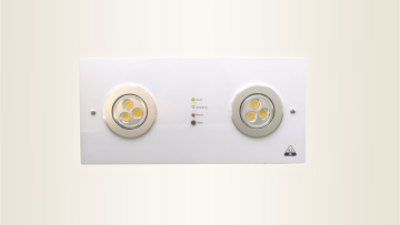
A recessed-mounted twin-spot LED emergency light with a 2x3W output and 6V configuration provides dependable illumination when normal power is interrupted. Its compact ceiling design sits neatly within the surface, creating a clean, modern appearance while directing light toward corridors, stairways, offices, retail areas, and other spaces that require clear emergency visibility. The QS360Y220L0606-10C1 is designed as a robust emergency luminaire, combining efficient LED performance with a practical form factor for everyday safety and outage situations.

Installation should begin with selecting a suitable ceiling position that offers unobstructed light coverage and convenient access to the electrical supply. After confirming the mounting cutout and cable route, isolate the power, connect the unit according to the supplied wiring instructions, and secure the recessed housing firmly. The twin adjustable spotlights can then be positioned to improve coverage along escape routes or occupied areas. A functional test should be completed after installation to verify charging, emergency operation, and indicator performance.

When buying a 6V recessed emergency light, consider light distribution, fitting dimensions, emergency duration, charging performance, construction quality, and compatibility with the available electrical system. Also check whether the product includes the required mounting accessories, clear installation instructions, and suitable testing features. A dependable model should offer stable illumination, simple maintenance, and a discreet appearance without compromising visibility during a power failure.

FAQS

What defines a capable ceiling light manufacturer in China?

Strong manufacturers often coordinate design, tooling, assembly, and testing within one supply network. This structure supports custom sizes, finishes, beam angles, and color temperatures. Production flexibility can shorten project development time. Scale alone is not enough.

Which documents should buyers request from a ceiling light factory?

Request material records, electrical inspection procedures, aging-test results, component lists, and warranty conditions. Ask for original laboratory reports, not cropped images. Factory videos can reveal production organization. Documents may still be incomplete, so verify important details.

How can buyers assess production quality during a factory visit?

Look for labeled components, clean work areas, and traceable inspection points. Check whether workers record test results consistently. Review recent production records, not only polished samples. Small checks matter.

Why are thermal control and testing important for LED ceiling lights?

Poor heat control can reduce brightness over time. A high initial lumen value may decline quickly. Buyers should measure output after thermal aging. Efficiency figures can mislead.

Which performance reports are useful for evaluating ceiling lights?

Photometric reports can show output, beam distribution, and color consistency. LED package data can support lumen-maintenance projections. Check the test date and complete report pages. Old results may not represent current production.

What should buyers inspect in ceiling emergency lights?

Check battery endurance, charging protection, switching time, and emergency illumination. Confirm safe installation details and documented inspection procedures. The emergency mode should perform reliably, not merely appear in a quotation. Test it.

How should buyers compare samples and quotations?

Compare samples with identical specifications, including wattage, color temperature, and finish. Measure light output under similar conditions. An unusually low price deserves careful questions. Cheaper is not always better.

Can an approved sample guarantee consistent batch quality?

No. A perfect sample proves little about every later batch. Test random units and review failure-rate records when possible. Continuous inspection remains necessary because careful evaluations can still miss problems. Check twice.

Conclusion

China’s ceiling light manufacturing industry has developed into a broad and highly capable sector, serving residential, commercial, industrial, and outdoor applications. This summary explores how to evaluate Ceiling Light manufacturers by considering production capacity, design expertise, material selection, technical innovation, delivery reliability, and customer service. Leading manufacturers typically offer diverse product categories, including recessed lights, surface-mounted fixtures, panel lights, track systems, smart lighting, and decorative solutions, while supporting customized sizes, finishes, color temperatures, and control systems.

The article also examines manufacturing standards, product testing, certifications, inspection procedures, and quality-control systems that help ensure safety, consistency, and long-term performance. In addition, it discusses export experience, packaging, documentation, logistics coordination, sample development, OEM and ODM services, and supply-chain support. By comparing these factors, buyers can better identify reliable manufacturing partners that meet project requirements, maintain stable quality, support flexible customization, and deliver lighting products efficiently to international markets.

Ethan

Ethan

Ethan is a dedicated marketing professional at Foshan Kaili Lighting Technology Co., Ltd., a leading enterprise in the realm of emergency and green lighting since its establishment in 2004. With a wealth of experience and an unwavering commitment to excellence, Ethan possesses an exceptional......
Previous How to Choose Emergency Fire Lights for Global Sourcing?