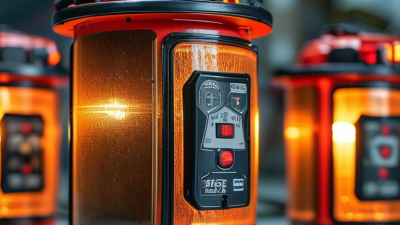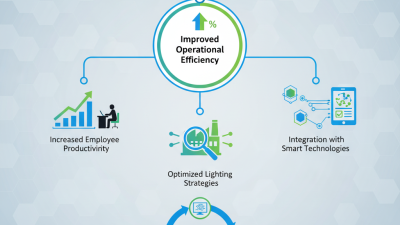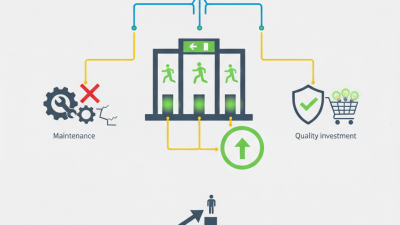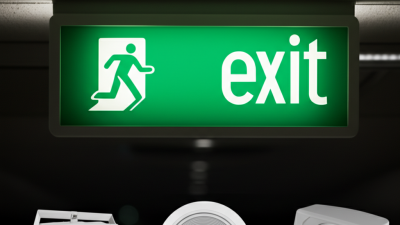
Choosing a reliable Emg Lights in 2026 isn't just about comparing brightness or hunting for the best online deals. You really want products that perform consistently—whether you're dealing with workshops, studios, vehicles, or outdoor jobs. When making a call, it’s smart to think about things like how much light it puts out, how well you can control that beam, how true the colors look, the battery life, charging options, heat management, and how tough the housing is. Don’t forget to check documentation, warranty support, and regional certifications too—that stuff can be a real lifesaver.
In real-world use, the differences become pretty clear. For example, a small light might fit neatly next to an engine in a tight spot, while a bigger unit can really light up an entire workspace. Some models might seem super bright at first but then fade pretty quickly—bright idea, but knowing how long they stay bright really matters. Dusty garages, cold warehouses, or long hours on inspection shifts can reveal flaws that you might not notice from product photos. Our top picks for the 10 Best Emg Lights for 2026 are based on real-life testing—not just lab specs—because that’s what actually counts.
When choosing, look for brands that offer clear specs and reliable customer support. Companies like Streamlight, Coast, Nitecore, and Milwaukee each have their own take on durability, portability, and professional use. But hey, no brand's perfect—battery performance can change with temperature, age, or how you charge it. And sometimes, marketing hype can sound way better than what the product actually delivers.
This guide is all about practical, hands-on advice, technical comparisons, and what real buyers need to know. It’s perfect for pros, maintenance crews, or even prepared homeowners. Still, make sure to check your local rules and regulations before buying. Little details can make a big difference. Remember, the brightest light isn’t always the best one—sometimes, it’s the one that still works well when conditions get tough.
Happy hunting!
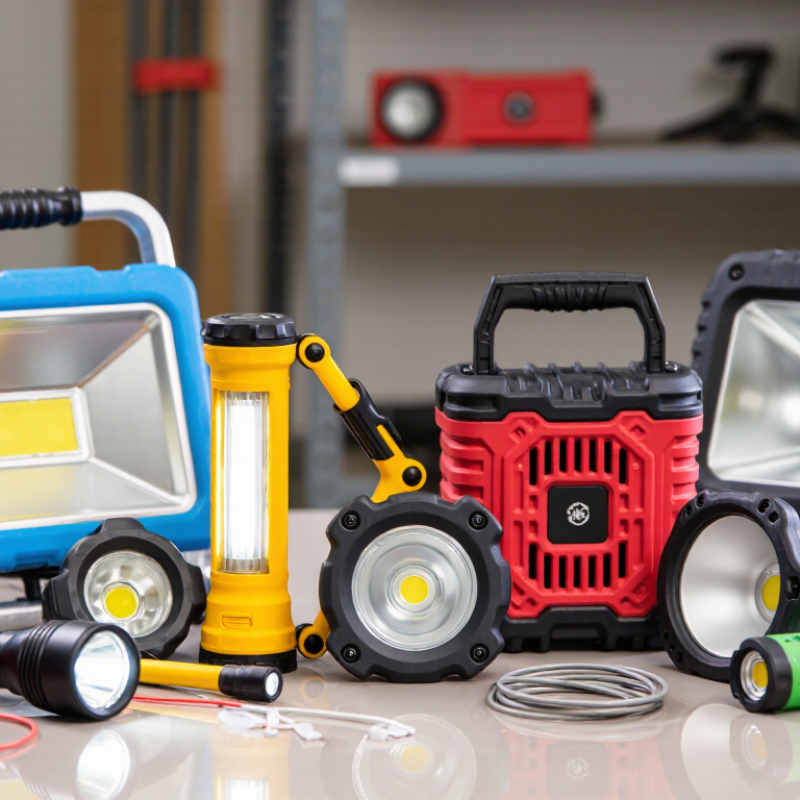
EMG lights usually refer to Emergency Lighting fixtures that operate when normal power fails. The abbreviation is not universal. Some suppliers use it for emergency mode, while others mean a complete emergency unit. Buyers should check the technical datasheet, not rely on the label alone.
During normal operation, mains electricity powers the LEDs and charges an internal battery. A monitoring circuit detects voltage loss, even during a brief outage. The fixture then switches to battery power through an Emergency Driver or inverter. LEDs continue producing light along corridors, stairways, exits, or work areas. A test button and status indicator help confirm charging and battery condition. In practical inspections, I check the rated duration, battery replacement method, beam pattern, and operating temperature. A higher lumen figure does not always provide better guidance. Glare, poor mounting height, and uneven spacing can leave dark patches. That detail is easy to miss. Global buyers should also verify voltage range, frequency, ingress protection, installation method, and applicable regional certification. Battery performance may decline in heat, cold, or prolonged storage. My own purchasing checklist would include a real discharge test, because printed specifications can look reassuring while field performance remains uncertain.
Choosing among the 10 Best EMG Lights for Global Buyers in 2026 requires more than comparing brightness. Start with the light’s intended environment. Check illumination distance, beam coverage, color temperature, and visible warning patterns. Emergency Fire Lights should remain clear through smoke, dust, and crowded escape routes. A compact housing helps in narrow corridors, while a wider lens may suit open industrial spaces. Confirm the rated operating temperature before installation.
Battery performance deserves close attention. Ask for tested runtime under the actual flash mode, not only standby figures. Rechargeable systems should show charging time, battery replacement access, and low-power warnings. Inspect the enclosure rating, cable protection, mounting strength, and resistance to vibration. Independent test reports provide stronger evidence than polished product claims. Regional electrical requirements can differ, so a qualified installer should verify compatibility.
Tips: Photograph the installation area first. Measure the viewing distance. Test the light after mounting. Keep spare batteries available. Read the maintenance schedule carefully. Some models look powerful but create glare near reflective walls. That detail is easy to miss. I would also compare controls, service access, and documentation quality. No checklist is perfect. A short on-site trial may reveal heat buildup, poor visibility, or an awkward mounting angle before a larger purchase.
The 10 Best EMG Lights for Global Buyers in 2026 should be judged by performance, not appearance. In practical inspections, clear illumination, reliable battery timing, and simple testing matter most. The strongest options include recessed ceiling units, surface-mounted panels, twin-spot fittings, exit-direction signs, weather-resistant bulkheads, remote-head systems, compact corridor lights, high-temperature models, low-profile wall units, and modular emergency lamps.
Recessed units suit clean commercial ceilings. Surface panels work better where installation must remain accessible. Twin-spot fittings cover wider floors, while exit signs support quick route recognition. Weather-resistant bulkheads fit damp service areas. Remote-head systems help illuminate stairwells and long corridors. Compact corridor lights save space. High-temperature models suit kitchens or plant rooms. Low-profile wall units reduce visual clutter. Modular lamps simplify future battery replacement.
For global buyers comparing Em Lights, check voltage range, charging time, emergency duration, beam spread, and operating temperature. Ask for photometric files and test records. Confirm the mounting hardware before ordering; mounting gaps can delay installation. Local electrical requirements still vary, even when specifications appear similar. I have seen attractive fittings fail because their batteries weakened in cold storage. That is an easy detail to miss. Some product sheets also overstate brightness without showing measured output. Independent testing is safer than trusting a photograph. Keep spare batteries available, but review their service life and replacement process. In 2026, the best choice may be slightly less bright, yet easier to inspect, repair, and document.
Choosing among the 10 Best EMG Lights for Global Buyers in 2026 depends on the application, not appearance. For offices, hotels, and corridors, select compact emergency bulkhead lights with wide, even distribution. Warehouses need higher lumen output, stronger impact resistance, and longer standby time. Outdoor walkways require weatherproof Led Outside Bulkhead Lights, UV-resistant housings, and corrosion protection. Parking areas benefit from beam control, visible status indicators, and easy battery replacement.
Healthcare facilities demand low-glare illumination and dependable self-testing functions. Industrial sites may require sealed fittings, vibration resistance, and temperature-rated batteries. For humid coastal projects, IP65 or higher protection is a sensible starting point, but local specifications still matter. The U.S. Department of Energy’s 2024 LED Lighting Facts data shows many listed LED products exceeding 100 lumens per watt. Efficiency helps, yet emergency duration and tested photometric performance remain more important.
Tips: Match the light to mounting height, ambient temperature, and evacuation-path width. Check IEC 60598-2-22 compliance and review test reports before purchasing. Also compare battery chemistry, recharge time, and replacement access. I have seen efficient fixtures fail early because heat was ignored. That is an easy mistake. Buyers should verify real operating data, not rely only on catalogue claims. Some projects may also need central monitoring, especially across large campuses or multi-floor facilities.
Selecting EMG lights for international projects requires more than comparing brightness and price. Buyers should confirm the product’s intended market, voltage range, emergency duration, and installation environment. Requirements may differ across regions. A product accepted in one country may need additional testing elsewhere.
Look for documented compliance with relevant IEC or EN emergency-lighting standards. Depending on the destination, buyers may also need CE or UKCA marking, UL or CSA certification, EMC testing, and RoHS declarations. These marks should match the exact model, not merely the manufacturer’s product family.
Ask for current test reports from competent, preferably accredited, laboratories. Check the report number, tested configuration, battery type, and manufacturing address.
Inspect the physical details before approval. Test the emergency button, indicator lamp, charging function, and stated battery duration. Measure illumination at floor level when possible. In dusty or damp locations, verify the IP rating and mounting instructions. Keep installation records and schedule routine discharge tests.
I have seen product sheets with impressive claims but incomplete photometric data. That should slow the purchasing decision. Standards also change, and translated documents can hide important limitations. Local electrical professionals should review wiring, fire-safety rules, and maintenance access before large-scale deployment. Small documentation gaps can become costly during inspections.
10 Best EMG Lights for Global Buyers in 2026? Pricing, Shipping, Warranty, and Supplier Considerations
Price should begin with the landed cost, not the factory quotation. Add tooling, packaging, duties, inspection, freight, and local certification fees. The International Energy Agency reports that lighting uses roughly 15% of global electricity. Efficient emergency luminaires can reduce operating costs, but efficiency alone does not prove reliability. Ask for measured lumen output, battery autonomy, charging time, and test conditions. A cheap unit may become expensive after one failed shipment.
Shipping needs practical planning. The World Bank’s 2023 Logistics Performance Index shows major differences in customs efficiency, infrastructure, and delivery reliability between markets. Request carton dimensions, gross weight, pallet quantities, and the correct product classification before ordering. Confirm whether batteries require special transport documents. Small details matter. I would also request pre-shipment photographs and a random inspection. This adds cost, but skipping it can create larger losses.
Warranty language deserves careful reading. A credible supplier should state coverage length, replacement procedures, battery exclusions, and response times. IEC 60598-2-22 provides relevant requirements for emergency lighting equipment, while ISO 9001 certification can support process control, but neither guarantees every product will perform well. Ask for current laboratory reports, traceable test samples, and production records. My own concern is often overlooked: suppliers may promise a three-year warranty but lack local service capacity. For global buyers, spare batteries, modular parts, and clear technical support can matter more than the longest headline warranty.
Indicative pricing, shipping, warranty, and supplier considerations for emergency lighting products
How to read this chart: Prices are indicative USD unit-price benchmarks for commonly supplied emergency-lighting configurations, excluding taxes, installation, certification, and local duties. Actual quotations vary by order quantity, battery type, certification, ingress protection, and destination.
| Product configuration | Typical shipping window | Common warranty range | Supplier consideration |
|---|---|---|---|
| Self-contained exit sign | 7–30 days | 1–3 years | Confirm viewing distance, pictogram format, and local approval. |
| Twin-head emergency light | 7–28 days | 1–3 years | Check beam angle, battery replacement, and test-button access. |
| Surface bulkhead emergency light | 10–35 days | 2–5 years | Verify IP rating, operating temperature, and wall or ceiling mounting. |
| Recessed emergency downlight | 14–45 days | 2–5 years | Request cut-out dimensions, ceiling depth, and photometric files. |
| Weatherproof emergency fitting | 14–45 days | 2–5 years | Confirm ingress protection, UV resistance, and cable-entry design. |
| Industrial emergency luminaire | 21–60 days | 3–5 years | Evaluate lumen maintenance, ambient temperature, and spare-part supply. |
| High-bay emergency light | 21–60 days | 3–5 years | Check mounting height, emergency output, battery temperature, and controls. |
| Central-battery emergency fitting | 30–75 days | 3–5 years | Confirm voltage compatibility, monitoring protocol, and system integration. |
| Self-testing emergency luminaire | 21–60 days | 3–5 years | Ask for test logs, fault indicators, and replacement battery availability. |
| Hazardous-area emergency light | 45–90 days | 3–5 years | Require the correct hazardous-area certification for the installation zone. |
Emergency-lighting duration, photometric performance, electrical safety, and certification requirements differ by jurisdiction. Buyers should verify applicable standards, including local implementations of EN 1838, EN 60598-2-22, UL 924, or equivalent requirements before placing an order.
Choosing the right EMG light starts with the market, not the catalog. Check local emergency-lighting rules, voltage, mounting methods, and maintenance practices. IEC 60598-2-22 defines important requirements for emergency luminaires, including endurance and safety testing. Certification must match the destination market. A familiar test mark may not be accepted everywhere.
Review the site conditions carefully. Outdoor corridors may need Outside Bulkhead Lights with suitable ingress protection, impact resistance, and corrosion control. A coastal project needs different housing from a dry warehouse. Battery performance also changes with temperature. Ask for autonomy tests, charging-cycle results, lumen output, and photometric files. The U.S. Department of Energy reports that LED systems can use up to 75% less energy than incandescent lighting and last much longer. Efficiency matters, but poor light distribution still creates dark steps.
Consider the total operating cost. The International Energy Agency has reported that lighting uses roughly 15% of global electricity consumption. A lower-wattage fitting may reduce energy bills, yet replacement batteries can erase those savings. Request clear data on battery chemistry, service intervals, spare-part availability, and warranty limits. In practical evaluations, installation time often matters as much as rated performance. This is easy to underestimate. I would also test a sample in the actual environment before ordering in bulk. Product sheets can look convincing, but glare, shadows, and cold-start behavior may reveal weaknesses. Allow room for doubt.
| Rank | EMG Light Configuration | Best Market Application | Typical Light Output | Emergency Duration | Battery Technology | Charging Time | Ingress Protection | Typical Input | Recommended Standard Check | Key Buying Advantage |
|---|---|---|---|---|---|---|---|---|---|---|
| 1 | Self-Contained LED Twin-Spotlight | Warehouses, factories, logistics centers and large open areas | 1,000–2,000 lm | 3 hours | Rechargeable lithium-ion or nickel-metal hydride | 12–24 hours | IP20–IP42 | 220–240 V AC, 50/60 Hz | IEC 60598-2-22; IEC 60598-1; local fire and electrical rules | Wide beam coverage and strong visibility over long evacuation routes |
| 2 | Recessed Ceiling Emergency Downlight | Offices, hotels, retail units and modern commercial interiors | 150–350 lm | 3 hours | Rechargeable lithium-ion or nickel-metal hydride | 12–24 hours | IP20–IP44 | 220–240 V AC; some versions support 100–277 V AC | IEC 60598-2-22; ceiling and fire-rating requirements | Low visual impact and clean architectural installation |
| 3 | Surface-Mounted Emergency Bulkhead | Schools, apartment buildings, corridors and utility rooms | 120–300 lm | 1.5–3 hours | Nickel-metal hydride or lithium-ion | 12–24 hours | IP44–IP65 | 220–240 V AC, 50/60 Hz | IEC 60598-2-22; IK impact rating where required | Simple installation, durable housing and broad application range |
| 4 | Exit Sign with Integrated Emergency Light | Hotels, shopping centers, public buildings and offices | 80–200 lm for emergency illumination | 3 hours | Rechargeable nickel-metal hydride or lithium-ion | 12–24 hours | IP20–IP54 | 220–240 V AC; universal-input versions also available | ISO 7010 safety symbols; IEC 60598-2-22; local exit-sign rules | Combines directional wayfinding with emergency escape lighting |
| 5 | Weatherproof Emergency Batten | Car parks, workshops, cold rooms and semi-outdoor facilities | 800–2,500 lm | 3 hours | Rechargeable lithium-ion or nickel-metal hydride | 12–24 hours | IP65–IP66 | 220–240 V AC; selected models support 100–277 V AC | IEC 60598-2-22; IP testing under IEC 60529 | High protection against dust and water with linear illumination |
| 6 | Central-Battery LED Emergency Luminaire | Hospitals, airports, tunnels and large multi-building projects | 150–1,500 lm | 1–3 hours, controlled by central system | Central battery system; commonly lithium-ion or valve-regulated lead-acid | System-dependent | IP20–IP65 | Typically 24 V DC, 48 V DC or other project-specific DC supply | IEC 60598-2-22; central power-system and fire-safety requirements | Centralized monitoring, maintenance and battery management |
| 7 | High-Temperature Emergency Luminaire | Bakeries, industrial plants, boiler rooms and hot production areas | 300–1,200 lm | 1–3 hours | Temperature-rated lithium-ion or nickel-metal hydride | 12–24 hours | IP44–IP65 | 220–240 V AC; project-specific voltage options | IEC 60598-2-22; manufacturer-rated ambient temperature range | Designed for elevated ambient temperatures that reduce ordinary battery life |
| 8 | Explosion-Protected Emergency Light | Petrochemical facilities, paint rooms, fuel storage and hazardous zones | 200–1,000 lm | 1.5–3 hours | Rechargeable lithium-ion or nickel-metal hydride in certified enclosure | 12–24 hours | IP65–IP66 | 220–240 V AC or project-specific low-voltage supply | Applicable ATEX or IECEx certification; IEC 60079 series; IEC 60598-2-22 | Suitable for hazardous locations when the complete product is certified |
| 9 | Portable Rechargeable Emergency Lantern | Construction sites, temporary facilities, transport and disaster response | 200–1,000 lm | 4–12 hours, depending on brightness | Rechargeable lithium-ion or sealed lead-acid | 4–10 hours | IP54–IP67 | 100–240 V AC charger; USB charging on some designs | Applicable battery, charger, EMC and low-voltage safety requirements | Easy deployment without fixed wiring or permanent installation |
| 10 | Solar-Assisted Emergency Area Light | Remote sites, outdoor paths, developing-grid regions and perimeter areas | 300–2,000 lm | 8–24 hours, depending on solar resource and operating mode | Rechargeable lithium iron phosphate or lithium-ion | Approximately 6–10 hours of effective sunlight | IP65–IP66 | Solar module with low-voltage DC battery system | IEC 60598-2-22 where applicable; IEC 60529; battery and photovoltaic safety rules | Reduced grid dependence and lower trenching or cabling costs |
Selection priority: confirm required emergency duration, illuminance calculations, mounting method, ambient temperature, IP or IK rating, battery replacement strategy, input voltage, photometric performance and mandatory certification for the destination market.
EMG lights usually mean emergency lighting fixtures. They operate when normal electricity fails. The abbreviation is not universal. Check the technical datasheet carefully.
Normal electricity powers the LEDs and charges an internal battery. A monitoring circuit detects voltage loss. An emergency driver then switches to battery power. The LEDs continue lighting corridors, stairs, exits, or work areas.
Use the test button and inspect the status indicator. A real discharge test gives stronger evidence than printed claims. Record the operating duration and charging time. Test it.
No. Higher lumen output may create glare. Poor mounting height can also leave dark patches. Uneven spacing affects route visibility. Measured light distribution matters more than appearance.
Recessed units suit clean ceilings. Surface-mounted panels help when access matters. Twin-spot fittings cover wider floors. Exit signs support quick route recognition.
Weather-resistant bulkheads suit damp service areas. High-temperature models fit kitchens or plant rooms. Remote-head systems help illuminate long corridors and stairwells. Always check the rated operating temperature.
Check voltage range, frequency, charging time, and emergency duration. Review beam spread, ingress protection, and mounting requirements. Confirm regional electrical requirements and applicable certification. Similar specifications may still hide important differences.
Heat, cold, and prolonged storage can weaken batteries. A fitting may look new but perform poorly. Review battery service life and replacement steps. Keep suitable spare batteries available. This is easy to miss.
Ask for photometric files, test records, and mounting hardware details. Confirm the battery replacement method. Check actual discharge performance when possible. A checklist helps, but it is not perfect.
This guide explores how Emg Lights work, including their core components, illumination methods, power options, and emergency activation features. It explains the key factors global buyers should compare before making a decision, such as brightness, battery life, charging performance, durability, installation flexibility, visibility range, operating temperature, and maintenance needs. The guide also presents ten leading types of Emg Lights for 2026, organized by practical performance and suitability for different environments rather than by brand.
Readers will learn how to match each light with applications such as commercial buildings, industrial facilities, transportation areas, outdoor spaces, and backup safety systems. The article also reviews general safety standards, certification requirements, product testing, and regional compliance considerations. In addition, it covers pricing, shipping arrangements, warranty terms, supplier reliability, after-sales support, and market-specific product selection. By evaluating technical specifications, operating conditions, purchasing risks, and local requirements together, buyers can choose dependable Emg Lights that provide suitable performance and long-term value in their target markets.