Exit Signs might seem like a small detail, but they really are crucial when it comes to keeping folks safe inside buildings and public spaces. Think of them as the guiding lights during emergencies—whether it’s a fire, an earthquake, or some unexpected crisis—they point people in the right direction. I read somewhere that John Matthews, who’s a safety pro at the National Fire Protection Association, said, “The visibility and clarity of exit signs can mean the difference between a safe escape and total chaos.” That really hits home, right? It’s not enough to just slap up some exit signs; they’ve got to be up to code and well-maintained for them to do their job properly.
Now, in situations where visibility drops—like during a fire or power outage—having properly lit exit signs becomes all the more important. They do more than just point the way—they help prevent confusion and panic, so everyone can evacuate quickly and calmly. Plus, where these signs are placed and how they’re designed really matters—people need to see them from different angles and distances without much trouble.
All in all, understanding just how vital exit signs are in emergency situations is really key to keeping everyone safe. Good signage can literally save lives by helping people respond faster when it counts. That’s why there are rules and standards about how they should be installed and taken care of. Making sure your exit signs are up-to-date and working properly isn’t just a good idea—it’s a must for any building’s safety plan.

Definition and Purpose of Exit Signs in Safety Protocols
Exit signs play a crucial role in safety protocols within buildings and public spaces. These signs serve as visual indicators that guide individuals towards the nearest exit during emergencies such as fires, earthquakes, or other hazardous situations. By clearly marking escape routes, exit signs help to prevent panic and disorder, allowing for a more organized evacuation process. The importance of these signs cannot be overstated; they are essential for ensuring that occupants can swiftly locate safe exits regardless of visibility or environmental factors.
Tips for effective use of exit signs include ensuring that they are properly illuminated and easily visible from various angles. Regular maintenance checks should be conducted to guarantee that the signs remain in good condition and legible. Moreover, exit signs should be positioned at strategic points, such as along corridors and above doors, to direct individuals clearly and efficiently toward safety. In addition, it's important to incorporate exit sign awareness into emergency drills, so that everyone in the space recognizes these vital tools and understands how to respond promptly during an emergency.
Historical Development of Exit Signs and Their Regulatory Evolution
The historical development of exit signs is closely tied to the broader evolution of safety regulations within buildings and public spaces. In the early days of urbanization, there was little standardization regarding safety signage, which often led to confusion during emergencies. As buildings grew taller and populations increased, the need for clear egress routes became paramount. The National Fire Protection Association (NFPA) reports that nearly 70% of fire-related fatalities occur in buildings insufficiently equipped with clear emergency exit pathways. This alarming statistic prompted a shift towards formalized regulations in the mid-20th century.
By the 1970s, municipal and state regulations began to standardize exit sign design and placement to enhance visibility and comprehension. The introduction of illuminated and reflective exit signs significantly improved the ability of occupants to locate exits in smoke-filled or dark environments. According to the International Building Code (IBC), exit signs must be placed above doorways and at the intersection of corridors, supported by data from the National Institute of Standards and Technology (NIST), which indicates that clearly marked exits can reduce evacuation times by as much as 30%. Over the years, these regulations have evolved further to include mounting heights, font sizes, and color contrasts to cater to the needs of diverse populations, ensuring that exit signs are universally accessible and effective in crisis situations.
Types of Exit Signs: Design, Materials, and Functionality
Exit signs play a crucial role in maintaining safety within buildings and public spaces, guiding individuals towards the nearest evacuation routes. The design of these signs is typically standardized; they are typically illuminated and feature bold, easy-to-read letters that contrast strongly with their backgrounds. This high visibility ensures that in low-light conditions or in the event of an emergency, individuals can quickly identify the exit routes. The colors red and green are commonly used due to their universal recognition, with red signaling danger and urgency, while green often indicates safety and a clear way out.
In terms of materials, exit signs are often constructed from durable substances such as acrylic or polycarbonate, which are resistant to damage and fading over time. Many modern designs incorporate LED technology, which not only enhances visibility but also provides energy efficiency and a longer lifespan. Functionality is another key aspect; some exit signs are equipped with backup battery systems that ensure they remain lit during power outages, thus maintaining clear guidance for safe evacuation. Overall, the careful consideration of design, materials, and functionality makes exit signs a vital component of emergency preparedness in any environment, ultimately saving lives in critical situations.
Importance of Exit Sign Visibility and Placement in Emergency Situations
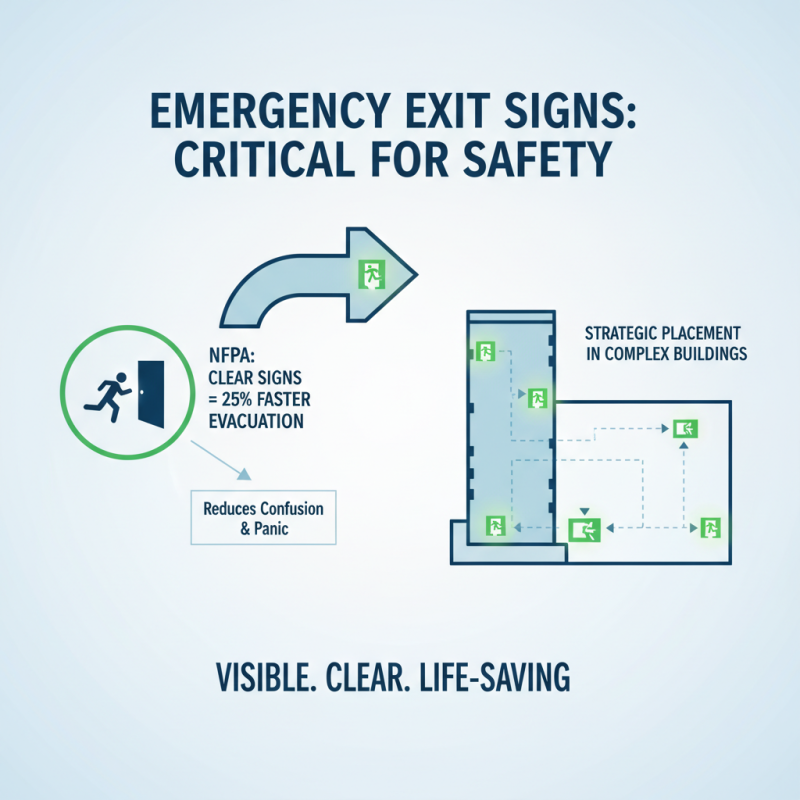
The visibility and placement of exit signs are critical components in ensuring safety during emergencies in buildings and public spaces. According to the National Fire Protection Association (NFPA), clear signage can increase the likelihood of quick evacuation by up to 25%. This statistic underscores the importance of strategically placing exit signs in locations that are easily visible from all directions. In complex structures, such as high-rise buildings or large public venues, a well-thought-out layout of Exit Signage can drastically reduce confusion and panic in emergency situations.
To enhance effectiveness, exit signs should be illuminated and positioned at key junctures—specifically, near exits, along egress routes, and at decision points where individuals may need guidance. The Occupational Safety and Health Administration (OSHA) emphasizes that exit paths must be free of obstructions and well-marked to facilitate swift evacuation. A study by the International Safety Equipment Association (ISEA) found that incorporating reflective materials and adhering to standardized color contrast can improve exit sign readability by over 30%, particularly in low-light conditions. By prioritizing visibility and appropriate placement of exit signs, we can significantly enhance the safety and preparedness of occupants in both public and private spaces during emergencies.
Legal Requirements and Standards Governing Exit Sign Usage
Legal requirements and standards for exit sign usage are established to ensure that occupants can safely navigate buildings in emergencies. The National Fire Protection Association (NFPA) and the International Building Code (IBC) set forth guidelines that dictate the placement, illumination, and visibility of exit signs. These regulations mandate that exit signs must be clearly marked and illuminated at all times to provide immediate guidance during fire drills or actual emergencies. This assurance of clarity and visibility minimizes confusion and panic, enabling quick and effective evacuation.
Compliance with local fire codes and building regulations is crucial for property owners and managers. They are required to conduct regular inspections of exit signs to ensure they are functional and meet established standards. In many jurisdictions, failure to comply with these requirements can lead to significant penalties, including fines and increased liability in the event of an emergency. Furthermore, integrating technology, such as photoluminescent materials or battery-backed lighting, can enhance exit sign effectiveness, providing an additional safety layer to navigate escapes in low-visibility conditions. Understanding and implementing these legal standards not only promotes safety but also fosters a culture of preparedness in public spaces and buildings.
Impact of Exit Signs on Risk Management and Emergency Response Plans
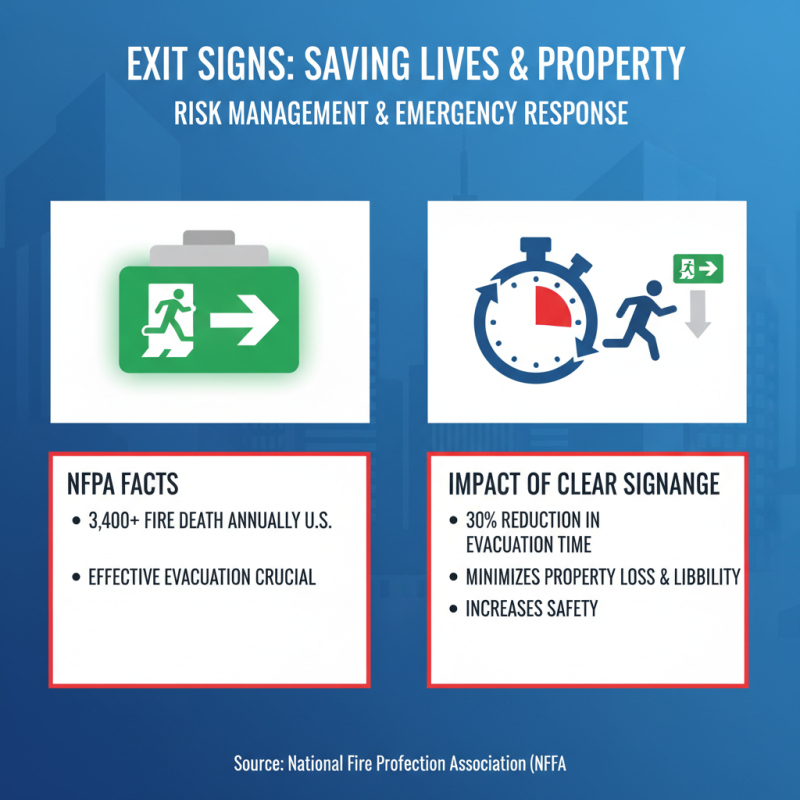
The presence of exit signs in buildings and public spaces plays a crucial role in risk management and emergency response. According to the National Fire Protection Association (NFPA), nearly 3,400 civilian deaths from fire-related incidents occur annually in the United States, underscoring the importance of effective evacuation strategies. Well-placed exit signs can significantly reduce evacuation time during emergencies, with studies indicating that clear and visible exit signage can cut evacuation time by as much as 30%. This efficiency is vital not only for saving lives but also for minimizing potential property loss and liability for building owners.
Moreover, the inclusion of illuminated exit signs as part of emergency response plans enhances the overall safety framework of a facility. The International Code Council (ICC) highlights that compliance with established signage regulations not only facilitates efficient evacuation but also ensures that all occupants can navigate their way to safety in low-visibility conditions. Furthermore, a report from the Occupational Safety and Health Administration (OSHA) reveals that environments equipped with systematic visibility measures, including exit signage, experience a 50% decrease in emergency-related injuries. This statistic emphasizes the power of a well-executed exit signage plan in promoting a culture of safety, enabling immediate action during emergencies and effectively managing risk.
Case Studies: Exit Sign Effectiveness in Real-Life Emergency Scenarios
In real-life emergency scenarios, the effectiveness of exit signs often plays a critical role in ensuring the safety of individuals within buildings and public spaces. For instance, during a recent fire evacuation at a multi-story office building, many occupants reported that the illuminated exit signs guided them clearly, even in conditions of smoke and chaos. The clear visibility of these signs enabled people to quickly identify the nearest exits, allowing for an effective and timely evacuation. This example highlights the necessity of proper lighting and positioning of exit signs to facilitate safe egress during emergencies.
Another case study to consider involves a high-traffic shopping mall where a sudden power outage occurred. In this incident, the functioning of exit signs powered by backup systems became vital. Shoppers reacted promptly thanks to the well-placed signs, which provided visible pathways to exits despite the overall darkness. Surveys conducted post-evacuation revealed that the presence of reliable exit signage significantly reduced panic and confusion, underscoring the importance of exit signs in maintaining order during emergencies. These scenarios emphasize not only the practical utility of exit signs but also their psychological impact on individuals facing potentially life-threatening situations.
Why Are Exit Signs Important for Safety in Buildings and Public Spaces
| Scenario | Location | Outcome | Time to Exit (seconds) | Sign Visibility |
| Fire Drill | Office Building | Evacuated Safely | 30 | High |
| Power Outage | Shopping Mall | Evacuated with Confusion | 45 | Moderate |
| Earthquake | School | Evacuated Instantly | 20 | High |
| Chemical Spill | Warehouse | Evacuated with Delay | 60 | Low |
| Active Shooter | University | Sheltered Safely | 15 | High |
Enhancing Safety with the 450 Surface Mounted Emergency Exit Sign: A Comprehensive Guide
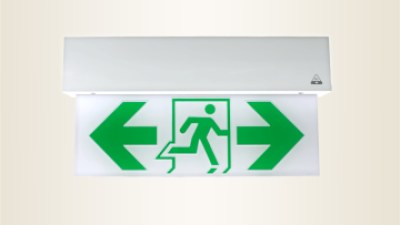
In commercial and public spaces, ensuring a safe exit during emergencies is paramount. One of the most effective ways to enhance safety protocols is through the installation of reliable emergency exit signage, particularly with the introduction of advanced models like the 450 surface mounted emergency exit sign. Unlike conventional models, this innovative approach to exit signage combines energy efficiency with high visibility, guiding occupants seamlessly through the safest routes during emergencies.
According to industry reports, effective Emergency Lighting systems can significantly reduce evacuation times. Research from the National Fire Protection Association (NFPA) indicates that well-placed and illuminated exit signs can improve occupant safety by up to 60%. The Model P450ZY220L033V6-10C exemplifies this evolution in emergency signage, offering a bright and reliable light source that adheres to installations in various environments. Its design not only covers the necessary requirements for power efficiency but also ensures that the pathways remain illuminated even when power sources may fail.
Furthermore, recent studies have highlighted the importance of integrating such systems in compliance with safety standards. The **International Building Code** emphasizes that effective emergency lighting must not only be reliable but also easily identifiable. The 450 surface mounted emergency exit sign’s design caters to these needs, ensuring that emergency egress routes are always clearly marked, thereby allowing occupants to navigate with confidence during a crisis. By enhancing safety through innovative signage, facilities can better prepare themselves for unforeseen events while prioritizing the well-being of their occupants.
FAQS
: The historical development of exit signs is linked to the evolution of safety regulations in buildings, addressing the confusion during emergencies as urbanization increased. Reports indicate a high percentage of fire-related fatalities occur in buildings with unclear emergency exit pathways, prompting standardized regulations.
Formal regulations for exit signs began to emerge in the mid-20th century, particularly in the 1970s when standards were established for design and placement to enhance visibility and comprehension.
The introduction of illuminated and reflective exit signs has significantly improved occupants' ability to locate exits in low-visibility environments like smoke-filled rooms, thereby enhancing overall safety during emergencies.
The International Building Code (IBC) stipulates that exit signs must be placed above doorways and at corridor intersections, ensuring clear visibility to occupants during emergencies.
Clearly marked exits, as supported by data from the National Institute of Standards and Technology (NIST), can potentially reduce evacuation times by up to 30%, emphasizing the importance of effective exit signage.
Property owners are required to comply with local fire codes and building regulations, which include conducting regular inspections of exit signs to ensure they are functional and meet established safety standards.
Non-compliance with exit sign regulations can lead to significant penalties, such as fines, and can increase liability in case of an emergency due to inadequate safety measures.
Integrating technology such as photoluminescent materials or battery-backed lighting can enhance the effectiveness of exit signs, providing crucial guidance in low-visibility conditions during emergencies.
It is essential for exit signs to be illuminated at all times to provide immediate guidance during fire drills or actual emergencies, minimizing confusion and panic among building occupants.
Exit sign regulations have evolved to include specifications for mounting heights, font sizes, and color contrasts to ensure signs are universally accessible and effective for diverse populations in crisis situations.
Conclusion
Exit signs play a crucial role in ensuring safety within buildings and public spaces by providing clear guidance during emergencies. Their definition encompasses both functional and symbolic aspects, aimed at aiding evacuation and minimizing panic. Historically, exit signs have evolved in design, regulatory standards, and material usage, reflecting changes in safety protocols over time.
The placement and visibility of exit signs are vital in emergency situations, significantly influencing risk management and emergency response plans. Legal requirements govern their usage, ensuring compliance across various environments. Case studies illustrate the effectiveness of exit signs in real-life emergencies, highlighting their impact on safe evacuations and reinforcing the necessity of these critical safety features in our communities.








 Phone
 Send Email
 whatsapp