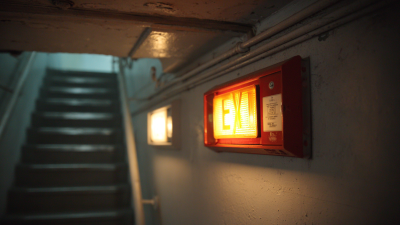
So, why choose LED lights for emergency lighting? It really comes down to safety, visibility, and performance you can count on. When the power goes out, people need clear paths, exit signs they can actually read, and steady light. LED emergency systems deliver that—and they usually use less energy and last longer, too. Their focused beam can light up corridors, stairwells, Fire Exits, and assembly areas without throwing off a harsh glare. And in a stressful moment, that makes a real difference.
LEDs also make life easier for facility teams. Modern units often come with self-testing, battery status indicators, and maintenance records that are easy to follow. Those features help trained crews catch problems before an emergency ever happens. Emergency Fire Lights need to stay visible through smoke, darkness, and confusion—while helping people evacuate in an orderly way. Still, brightness alone doesn't prove compliance. A qualified professional has to check spacing, battery duration, mounting height, and escape-route coverage. Local rules might point to standards like EN 1838, BS 5266-1, or NFPA 101, and what applies depends on the building and the region.
Here's a human detail worth keeping in mind: a small landing can feel huge when its normal lighting disappears. A weak shadow near the edge of a stair can make someone hesitate. LED products might cut down on replacement work, but they're not maintenance-free. Dust, aging batteries, poor placement, and incorrect testing can still chip away at protection. A rushed retrofit may look efficient on paper and then perform poorly in real life. Reliable results come from the right products, documented inspections, and installers with relevant experience. LED isn't a magic answer. It's a strong tool—when it's chosen carefully and reviewed honestly.
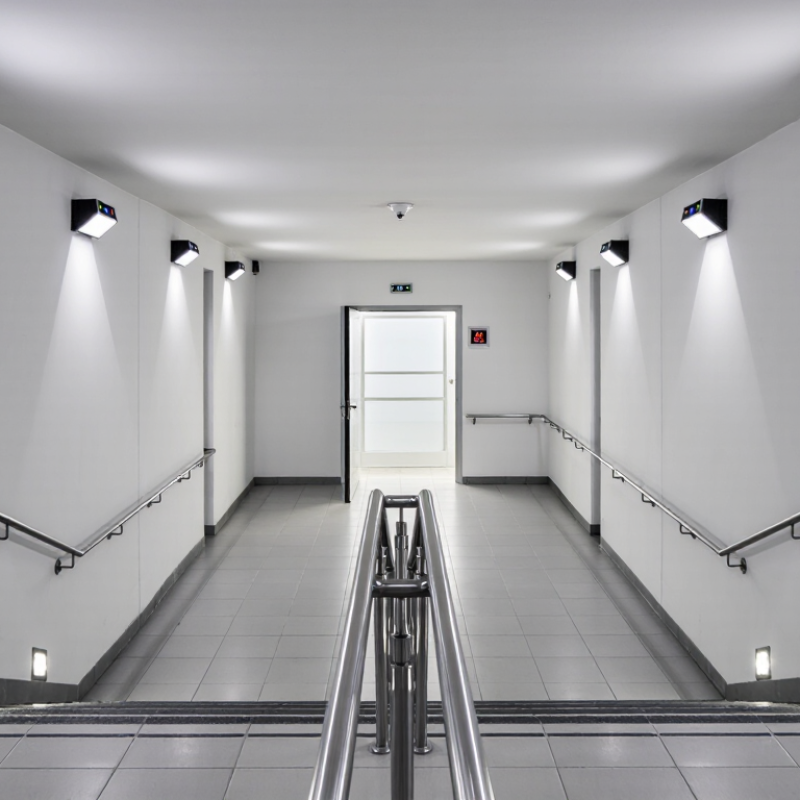
Definition and Purpose of LED Emergency Lighting
Why Choose LED Lights for Emergency Lighting?
LED emergency lighting is a battery-backed lighting system that operates when normal power fails. Its purpose is practical: keep escape routes, stairways, exits, and fire equipment visible during confusion. A dark corridor changes quickly. People may hesitate, turn back, or miss a doorway. In many U.S. applications, NFPA 101 requires emergency illumination for at least 90 minutes after power loss. Requirements can differ by building type and jurisdiction, so design review remains essential.
LEDs suit this role because they provide immediate light without warm-up time. The U.S. Department of Energy reports that modern LED products can achieve roughly 80–150 lumens per watt, depending on design and conditions. That efficiency can reduce battery demand and support smaller emergency power systems. The International Energy Agency also reports that LEDs use substantially less electricity and last much longer than incandescent lamps. In a real hallway, this means clearer floor edges, fewer dark patches, and less frequent lamp replacement.
Yet, no emergency system is perfect. Batteries lose capacity with age, heat, and poor maintenance. A bright LED cannot compensate for a failed charger or blocked exit sign. Monthly functional checks and periodic duration tests are therefore important. NFPA 101 and local codes provide useful maintenance direction, but records still depend on human discipline. That assumption can fail. Proper installation, photometric testing, and documented inspections make the definition of “emergency lighting” meaningful beyond the product label.
How LED Technology Supports Emergency Illumination
Emergency illumination must remain clear when normal power disappears. LED technology supports this through efficient light output, low heat, and rapid starting. The U.S. Department of Energy reports that LED products can use at least 75% less energy and last up to 25 times longer than incandescent lamps. That matters in battery-powered emergency units, where every watt affects backup duration. A corridor can stay visibly lit while a compact battery supplies the fixture. No warm-up period is needed.
Field experience also shows why optical control matters. LEDs can direct light toward stair treads, exit routes, and wall-mounted signs instead of wasting it inside a housing. The U.S. DOE Solid-State Lighting R&D Plan reports laboratory LED efficacy above 200 lumens per watt, although real products perform lower. This gap deserves attention. Poor thermal design, aging batteries, dust, and incorrect spacing can reduce actual performance. Under EN 1838 and NFPA 101 guidance, designers should verify illumination levels, visibility, and duration through documented testing. Outside Emergency Lights face rain, temperature changes, and impact, so sealed housings and suitable ingress protection are practical requirements. A monthly test may reveal a weak battery before an outage exposes it. Small details matter.
Energy Efficiency and Battery Performance
When power fails, emergency lighting must do more than glow; it must remain dependable after months of neglect. LED technology converts more electricity into visible light, reducing heat and wasting less energy inside the fitting. That efficiency matters in corridors, stairwells, and storage areas where fixtures may operate for hours. Less wasted power. In practical inspections, I look for clear illumination at floor level, not just a bright lens.
Lower energy demand also eases pressure on the backup battery. A battery feeding efficient LEDs can often support the required operating period with less capacity loss during each discharge. Still, performance depends on temperature, charging quality, battery age, and correct testing. Cold rooms can slow battery reactions. Dust can hide deterioration. For this reason, a maintenance log should record test dates, discharge duration, and visible changes in brightness. I have seen lights pass a quick switch test yet fail during a longer outage. That uncomfortable finding deserves attention.
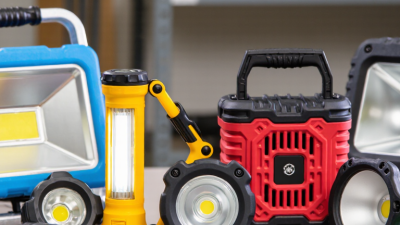
Frog Eye Emergency Lights can be evaluated by the same practical measures: light distribution, standby consumption, recharge time, and battery endurance. Do not judge efficiency from wattage alone. Check measured illumination and technical documentation from a qualified source. A realistic test should imitate the building’s conditions, including blocked routes, high ceilings, and seasonal temperature changes. LEDs usually offer long service life, but “usually” is not a guarantee. Replacement intervals still need review.
Why Choose LED Lights for Emergency Lighting? – Energy Efficiency and Battery Performance
| Performance Dimension | LED Emergency Lighting | Fluorescent Emergency Lighting | Incandescent Emergency Lighting | Practical Benefit of LED |
| Typical luminous efficacy | 80–150 lm/W | 50–100 lm/W | 10–17 lm/W | More light can be produced with less electrical power. |
| Representative power for approximately 800 lumens | About 8 W | About 16 W | About 60 W | Lower power demand reduces battery size and operating cost. |
Estimated battery runtime
Using a 12 V, 7 Ah battery with approximately 80% usable capacity and 85% driver efficiency | Approximately 7.1 hours | Approximately 3.6 hours | Approximately 1.0 hour | LED systems can provide longer backup operation from the same battery. |
Approximate battery-side current
At 12 V and 85% driver efficiency | About 0.78 A | About 1.57 A | About 5.88 A | Lower current reduces battery stress and voltage drop in wiring. |
| Energy used during a 3-hour emergency period | About 24 Wh | About 48 Wh | About 180 Wh | LED consumes approximately 50% less energy than fluorescent lighting and about 87% less than incandescent lighting in this example. |
| Heat generation | Low compared with incandescent sources | Moderate | High; most input energy becomes heat | Lower heat output can improve luminaire efficiency and reduce heat-related battery stress. |
| Switching and emergency activation | Instantaneous light output | May require warm-up time, especially at low temperatures | Instantaneous light output | LEDs provide immediate illumination when mains power fails. |
| Maintenance characteristics | Long service life; solid-state construction | Tube and ballast may require periodic replacement | Frequent lamp replacement may be required | Fewer lamp replacements can reduce maintenance visits and service interruptions. |
| Battery capacity required for a 3-hour target | Approximately 3.4 Ah at 12 V | Approximately 6.7 Ah at 12 V | Approximately 25 Ah at 12 V | LEDs can meet the same emergency-duration requirement with a smaller nominal battery. |
| Calculation note: The comparison uses representative power levels for approximately 800 lumens. Estimated usable battery energy is calculated as 12 V × 7 Ah × 80% × 85% = 57.1 Wh. Actual runtime depends on battery age, temperature, discharge rate, driver efficiency, rated light output, emergency-system design, and applicable safety requirements. |
Reliability, Lifespan, and Maintenance Requirements
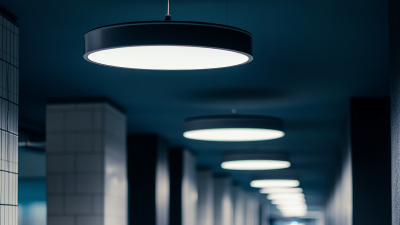
LED emergency lighting earns attention through dependable operation, long service life, and simpler maintenance. The U.S. Department of Energy reports that LEDs use at least 75% less energy and can last up to 25 times longer than incandescent lamps. This matters in corridors, stairwells, and warehouses where replacing lamps requires ladders or equipment. Ceiling Mount Emergency Lights can provide clear, even illumination while keeping fixtures away from impact and moisture.
Reliability still depends on the whole system, not only the LED chip. Battery condition, charging circuits, wiring, and temperature can cause failure. NFPA 101, the Life Safety Code, commonly references 90 minutes of emergency operation, although local requirements may differ. In practical inspections, a clean lens and a healthy indicator light are useful signs, but they prove very little alone. Dust reduces visible output. Aging batteries often fail quietly. LEDs also do not eliminate maintenance; they can hide it.
Tips: Test emergency units monthly, then record results. Perform a full-duration test at least annually, following local requirements. Check battery dates, loose terminals, blocked lenses, and uneven illumination. Keep replacement batteries available. A failed test should trigger investigation, not only a quick reset. The DOE’s LED lifetime figures describe gradual lumen depreciation, not guaranteed emergency performance. That distinction is easy to miss.
Safety Standards and Emergency Lighting Applications
LED lights are well suited to emergency lighting because they start instantly and use relatively little battery power. That matters when normal electricity fails. A few seconds can feel long in a dark stairwell. In practice, however, efficiency alone does not prove safety.
Safety standards define how emergency systems should perform, not merely how bright they appear. Applicable building and fire codes may require minimum illuminance, uniform light distribution, backup duration, and visible exit signs. Standards such as EN 1838, IEC 60598-2-22, or NFPA 101 may apply, depending on location. A qualified installer should confirm the correct rules before selecting equipment. Testing is essential. Batteries, charging circuits, indicators, and switching functions all need inspection.
LED emergency fixtures support escape routes, staircases, corridors, open areas, warehouses, hospitals, and high-risk work zones. In a warehouse, clear light should reveal floor obstacles and aisle direction. Near machinery, lighting must help workers stop safely during a power loss. During commissioning, measure light at floor level instead of trusting appearance. That practical step is often missed. Monthly functional checks and periodic duration tests can expose weak batteries or blocked fittings. No system is perfect. Dust, aging batteries, poor placement, and overlooked shadows can still reduce protection. Safety improves when design, installation, records, and real-world testing work together.
Choosing the Right LED Emergency Lighting System
Why Choose LED Lights for Emergency Lighting?
Choosing the right LED emergency lighting system requires more than comparing brightness and price. Start with the building’s layout, occupancy, ceiling height, and evacuation routes. Surface Mount Emergency Lights work well in corridors, stairwells, and low-clearance areas. Their compact profile reduces visual clutter and simplifies installation.
During a site inspection, check whether each fitting illuminates signs, floor changes, and doorways clearly. A reliable system should provide consistent light during power loss, support routine testing, and include accessible battery indicators. Confirm the product’s emergency duration, ingress protection, temperature range, and certification for your region. Qualified electricians should verify wiring and final performance.
Tips: Mark every fitting on an emergency plan. Test units under simulated power failure. Record battery condition and replacement dates. Keep lenses clean; dust can reduce useful light. I once saw a bright fitting aimed too high, leaving the floor surprisingly dark. That mistake was easy to miss. Review spacing with measured lux readings, not eyesight alone. Choose controls that maintenance staff can understand quickly. Keep spare components available, because an ideal system is still vulnerable to neglected checks.
FAQS
It is battery-backed lighting that operates when normal power fails. It keeps corridors, stairs, exits, and fire equipment visible. A dark hallway can make people hesitate.
LEDs provide light immediately, without warm-up time. They also use less electricity than older lamps. This can reduce battery demand and support longer operation.
Many applications require at least 90 minutes of emergency illumination. Local rules may differ by building type and location. Confirm the required duration during design review.
Install them along escape routes, stairways, doorways, and areas with floor changes. Check that signs and equipment remain visible. A bright fitting aimed too high can leave the floor dark.
Review the building layout, occupancy, ceiling height, and evacuation paths. Confirm battery duration, temperature range, moisture protection, and regional certification. Measured light readings are better than eyesight alone.
Test each unit monthly and record the result. Perform a full-duration test at least annually, following local requirements. Keep the records accessible.
Aging batteries, loose terminals, dust, damaged lenses, and failed chargers can reduce performance. Heat may shorten battery life. Dust matters. Clean lenses and check battery dates.
No. LED lifespan often describes gradual light reduction, not guaranteed emergency operation. A clean indicator light proves very little. A failed test needs investigation, not only a quick reset.
Conclusion
LED lights for emergency lighting are designed to provide dependable illumination when normal power fails, helping people move safely through buildings and locate exits, stairways, corridors, and essential equipment. Their efficient LED technology produces bright, consistent light while using less energy than traditional sources, allowing backup batteries to operate for longer periods. This makes Led Lights For Emergency applications practical for offices, schools, healthcare facilities, residential buildings, warehouses, and public spaces.
In addition to their low power consumption, LED emergency systems offer a long service life, strong durability, and reduced maintenance needs. Regular testing and battery checks remain important to ensure reliable operation when an emergency occurs. When selecting a system, users should consider lighting coverage, battery duration, installation conditions, automatic activation, inspection requirements, and applicable safety standards. Choosing a properly designed LED solution can improve visibility, reduce operating costs, and support a safer evacuation environment.



 Phone
 Send Email
 whatsapp