Ever been in a room when the power just goes out? It's amazing how fast everything changes. That's where a Battery Backup Light Bulb comes in handy – it gives you light when the mains are down. But honestly, you can't just go by how bright it claims to be. There's more to it: how long does the backup last? How does it charge? What's the battery capacity? How well does it spread light? And will it even fit with the fixtures you already have? All these little details can make or break the experience. You know how a light bulb can look perfect in the catalog? Yeah, turns out it might act totally different once you actually put it in a real room.
If you're just starting to look for suppliers, this guide covers ten manufacturers based in China. Think of it as a starting point—not a promise that every product will fit every project. You'll still want to compare current specs, ask exactly how they test things, and double-check whether that runtime number is based on real-world conditions. And don't forget to ask about samples, warranty terms, production capacity, and what kind of support you'll get after the purchase. If you can, try testing a sample in the same conditions it'll actually be used in. A spec sheet can look great on paper, but it doesn't always tell you the whole story. Worth keeping in mind, honestly.
Honestly, the 'right' supplier really depends on what you're building, who you're selling to, and how you plan to buy. Some folks are all about compact designs; others care more about long backup runtime or getting a steady bulk supply. So don't just skim the specs and call it a day—dig into the product details and see how suppliers actually respond. And remember, no list is ever going to be perfect. Use the profiles below to build your shortlist, then reach out to each company and double-check the specifics yourself.
What Is a Battery Backup Light Bulb?
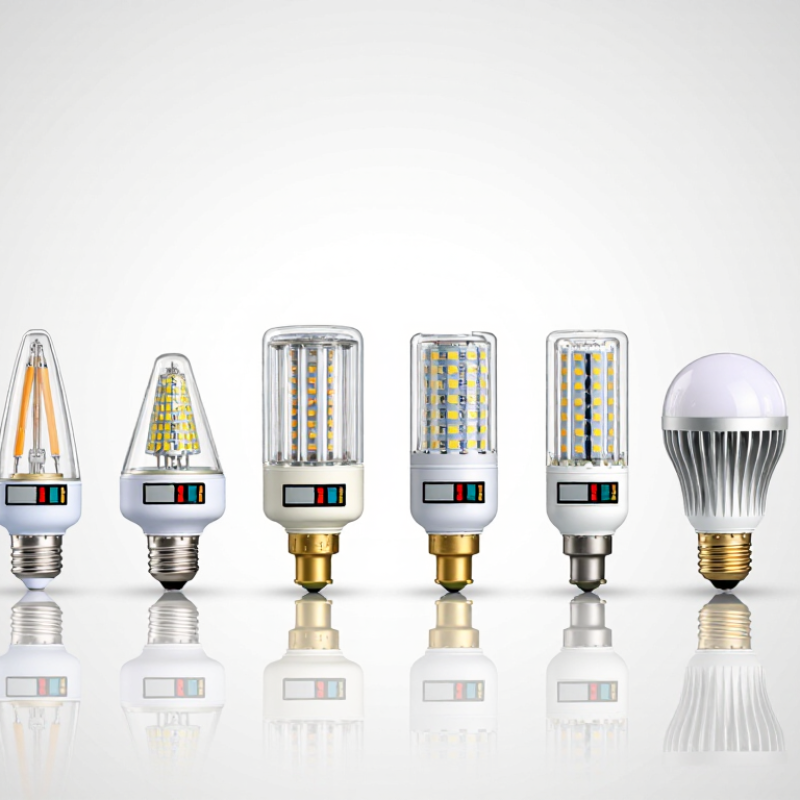
A Battery Backup Light Bulb resembles a standard LED bulb, but it also contains a rechargeable battery and a small control circuit. When household power is available, it works like an ordinary bulb and charges its battery. If the power fails, the circuit switches to battery operation, providing light without a separate emergency fixture. Some models require the wall switch to remain on during an outage; others have a test button or different controls. Check the instructions. The details vary.
Backup brightness and runtime depend on battery capacity, bulb design, and how fully the battery charged beforehand. A bulb may provide less light in backup mode, keeping a hallway visible without lighting it as brightly as usual. That can help during a short outage or while finding a flashlight. It is not a replacement for dedicated Emergency Lighting where dependable coverage matters. Fit and compatibility deserve attention: enclosed fixtures can trap heat, and some dimmers may affect operation. Battery performance also declines with age. That part is easy to overlook. Advertised runtime is not guaranteed in every home; temperature, charging time, and use all play a role. Compare backup brightness, charging requirements, base size, and battery expectations—not just normal wattage.
How Do Battery Backup Light Bulbs Work?
A battery backup light bulb combines an LED, a rechargeable battery, and a small charging circuit inside one housing. While household power is available, the circuit charges the battery and supplies power to the LED. The charging process is usually automatic. A tiny indicator may show charging status, though not every model has one.
When the power fails, the bulb detects the loss of mains electricity and switches to battery power. The LED then stays lit for a limited time, depending on battery capacity, brightness, age, and temperature. Some designs need the wall switch to remain on; others use a contact plate or button to activate backup mode. Check the product instructions, because this detail varies. It is easy to miss.
For a practical test, install the bulb in a compatible fixture, turn it on, and carefully simulate an outage using the fixture’s switch where appropriate. Do not assume every lamp or enclosed fitting will work well; heat and fixture design can affect performance. Led Emergency Light Battery Backup bulbs can provide useful light in a hallway or beside a stair, but they are not a substitute for checking battery condition over time. Rechargeable cells slowly lose capacity. The light may last less than expected.
China Top 10 Battery Backup Light Bulb Manufacturers - How Do Battery Backup Light Bulbs Work? | No. | Technical dimension | Typical design or specification | How it relates to backup operation |
| 1 | Mains input | Many household models are designed for 100–240 V AC, 50/60 Hz; check the product label for the actual range. | With mains power available, the bulb operates from the electrical supply and its internal charging circuit can recharge the battery. |
| 2 | Light source | LEDs are commonly used because they provide light efficiently and can operate from a compact battery-powered circuit. | When mains power fails, the control circuit can continue supplying power to the LEDs from the stored battery energy. |
| 3 | Battery chemistry | Rechargeable lithium-ion cells are common; chemistry and cell configuration vary by model. | The battery stores energy while the bulb is connected to mains power and releases it during an outage. |
| 4 | Battery capacity | Capacity is model-specific. Compare the stated battery voltage and capacity, or watt-hours (Wh), rather than relying on appearance alone. | Available stored energy is one factor affecting emergency brightness and runtime. |
| 5 | Charging circuit | An onboard circuit manages battery charging when the bulb receives mains power; charging behavior depends on the model. | The bulb generally needs to be installed and supplied with power long enough for its battery to charge before backup is available. |
| 6 | Outage detection | Electronic circuitry detects the loss of mains power and changes the bulb to battery operation. | This automatic changeover allows the LEDs to remain illuminated without a separate external backup power supply. |
| 7 | Emergency brightness | Backup brightness is product-specific and is often lower than the bulb’s normal mains-powered output. | Running the LEDs at reduced output can conserve stored energy and extend the time the bulb provides light. |
| 8 | Backup runtime | Runtime varies with battery condition, charge level, temperature, and emergency brightness. Use the manufacturer’s stated test conditions when comparing models. | A longer runtime generally requires more usable battery energy or lower power consumption. |
| 9 | Socket and switch conditions | The required switch position and test method depend on the bulb’s design; follow the product instructions. | Some models need the wall switch left on to keep the battery charged or to operate as intended during an outage. |
| 10 | Battery life and replacement | Rechargeable batteries gradually lose capacity with age and charge cycles; serviceability and replacement options vary by product. | Reduced backup time can indicate battery aging. Check the product documentation for maintenance and end-of-life guidance. |
| Note: This is a general technical overview of battery backup light bulbs, not a verified ranking or directory of manufacturers. Specifications and operating behavior vary by model; consult the product datasheet and instructions before purchase or installation. |
Key Product Types and Technical Features
Battery backup bulbs usually come in two forms: screw-in LED lamps with an internal rechargeable cell, and portable emergency bulbs with hooks or magnetic bases. The first can fit a familiar ceiling socket; the second is useful beside a doorway or in a stairwell. A Battery Backup Exit Sign is a separate product category, designed to keep its directional display visible during a power interruption.
Compare emergency-mode lumens, stated runtime, charging time, battery type, and socket compatibility. A model may provide lower light output on battery than on mains power. Check whether it switches automatically and includes a test button or indicator. The U.S. Department of Energy’s Energy Saver guidance says LEDs use at least 75% less energy and can last up to 25 times longer than incandescent bulbs. That general comparison does not guarantee any backup bulb’s runtime. A neat spec sheet is not the whole story; battery age and temperature affect results.
Tips: Test the lamp monthly, and note its actual runtime. Keep one in a hallway, where a focused pool of light can reveal stairs and door handles. Replace aging batteries as specified by the maker. Small detail, big difference.
How to Evaluate Chinese Light Bulb Manufacturers
When evaluating Chinese light bulb manufacturers, look beyond catalog photos and advertised wattage. Ask whether the factory designs battery backup bulbs in-house or assembles supplied components. The distinction affects troubleshooting, customization, and production control. Request a sample with its battery, driver, and housing intact.
Check measurable performance. Compare light output, backup runtime, charging time, and behavior after repeated charge-and-discharge cycles. Ask for dated test reports and confirm that they match the exact model under discussion. Samples can mislead. A polished prototype may not reflect routine production. Request units from a regular production batch and inspect their labeling, solder joints, and fit.
For Battery Backup Emergency Exit Lights, verify the intended use and testing requirements separately; these products are not interchangeable with ordinary backup bulbs. Ask how the manufacturer tracks component changes, checks defects, and handles replacement parts. A factory that answers clearly and shares consistent records is easier to assess than one relying on broad promises. Check references where practical, and agree on written inspection criteria before ordering. One caution: paperwork is useful, but it cannot replace hands-on checks. Production details can still vary.
Profiles of 10 Chinese Battery Backup Light Bulb Manufacturers
Chinese battery-backup bulb manufacturing spans several specialties. These ten profiles describe capability types, not a verified ranking or named-company assessment. One producer may focus on compact bulbs for apartments, fitting a rechargeable cell and LED driver into a familiar A-shaped housing. Another may develop higher-output models for stairwells, where clear light distribution matters. A third may offer OEM production, adapting packaging, color temperature, and fittings to buyer specifications. Some makers specialize in battery integration and test charging cycles. Others concentrate on driver design, aiming for stable switching between mains and backup power. Small details matter.
A fourth profile is the export-oriented factory, accustomed to preparing technical documents for overseas buyers. A fifth may serve commercial projects with bulk orders and consistent component sourcing. A sixth could focus on custom shapes, though unusual housings can complicate heat management. A seventh may add indicators that show charging or backup status. An eighth could prioritize automated assembly for repeatable production. A ninth may offer lower-volume customization, useful for pilot orders but sometimes slower to scale. A tenth may emphasize reliability testing, checking runtime, temperature rise, and repeated power interruptions. Ask how tests are performed, not only whether they are performed. Backup duration depends on battery capacity, lamp output, and aging; published figures need context. One limitation remains: without independent samples and clear test conditions, a polished specification sheet proves little.
Battery Backup Bulbs: Nominal Voltage by Rechargeable Battery Chemistry
Nominal voltage per cell varies by battery chemistry. These reference values describe chemistry-level characteristics, not specifications for any particular manufacturer or bulb; a battery pack’s voltage depends on how its cells are connected.
How to Compare Suppliers and Select a Manufacturer
When comparing China’s battery backup light bulb manufacturers, start with the emergency performance you actually need. Check rated wattage, backup runtime, charging time, battery type, and compatibility with your existing fixtures. Ask suppliers how runtime is measured and whether it changes at different brightness levels. A clear test report is more useful than a broad claim. Battery Backup Emergency Lights should also be assessed for normal-mode brightness and charging indicators, not just emergency operation.
Request a sample and review its fit, finish, and instructions. Test it after a full charge, then repeat the test after several weeks of storage. Ask for details about incoming inspections, battery checks, and production batch records. Compare warranty terms and response times in writing. A polished catalog is not proof of consistent output. Even a sample can be unusually good, so ask how production units are checked. This step takes time, but skipping it may cost more later.
Tips: Share your fixture type, target runtime, and expected order volume. Request the same test conditions from each supplier. Keep one sample for your own checks.
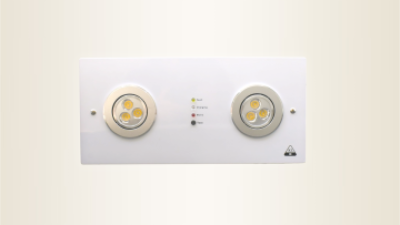
A Practical Guide to the Recess Mounted Twin Spot LED Emergency Light 2x3W (6V)
A recessed twin-spot emergency light combines a discreet ceiling finish with focused illumination for corridors, stairways, entrances, and other circulation areas. This 6V design uses two 3W LED heads, allowing light to be directed toward key routes when normal power is interrupted. Its low-profile installation can help maintain a clean architectural appearance while keeping emergency lighting close to where occupants need it. For facility planners, the twin-head format also offers flexibility: each spot can be aimed to cover a different part of a route or exit approach.
Emergency lighting should be selected with runtime and coverage in mind, not appearance alone. NFPA 101, the Life Safety Code, provides a widely used benchmark of 90 minutes of emergency illumination. The U.S. Energy Information Administration reported that customers experienced an average of about 5.5 hours of electricity interruptions in 2022, including major events—an indication of why dependable backup lighting matters. A recessed 2x3W, 6V luminaire is a practical option for spaces where clear visibility during an outage is essential; confirm that the complete installation’s battery runtime, light distribution, and testing provisions suit the site’s needs.
FAQS
It contains an LED, a rechargeable battery, and a small charging circuit. The circuit charges the battery while household power is available.
It detects the loss of mains power and switches to its battery. The LED then stays lit for a limited time.
It depends on the design. Some bulbs need the wall switch left on; others use a contact plate or button. Check the instructions.
Runtime depends on battery capacity, brightness, age, and temperature. Aged batteries may provide less light than expected. It varies.
No. Fixture compatibility, heat, and enclosure design can affect performance. Check the bulb’s fit and test it carefully.
Charge it fully, then follow its instructions to simulate a power loss. Retest after several weeks of storage, too.
Ask about runtime, charging time, battery type, fixture compatibility, and test conditions. Request a clear report, not just a broad claim.
Check its fit, finish, instructions, and operation after charging. Ask how batteries and production batches are inspected. One good sample can fool you, honestly.
Share your fixture type, target runtime, and expected order volume. Compare suppliers using the same test conditions. Keep one sample for your own checks.
Conclusion
This article explains what a Battery Backup Light Bulb is and how its built-in battery supports illumination when the main power supply is interrupted. It outlines the basic charging and switching process, then reviews common product types and practical technical features, such as battery capacity, backup duration, brightness, charging time, bulb base, and operating conditions. These details help readers understand how product design affects everyday use and how to compare options for different needs.
The guide also presents profiles of 10 Chinese manufacturers, focusing on their product offerings and general capabilities without relying on brand promotion. It introduces useful ways to evaluate suppliers, including product specifications, quality control, customization options, production capacity, communication, and after-sales support. By comparing these factors alongside price and intended application, buyers can make a more informed choice and select a manufacturer whose products and services match their requirements.






 Phone
 Send Email
 whatsapp