Buying a Smart Light Tube isn't just a simple choice between wattage and price anymore. If you're buying globally, you've got to think about efficiency, connectivity, safety, installation, and long-term support. The International Energy Agency says lighting is still a big chunk of electricity use worldwide—even with all the efficient tech out there. The U.S. According to the Department of Energy, LED products can use at least 75% less energy than incandescent bulbs—and they last up to 25 times longer. Those numbers are handy as a rough benchmark, sure. But they don’t necessarily mean every tube design will perform the same way.
Honestly, it’s real projects that really show you where the gaps are. Take a warehouse—it might need something like 4,000 lumens, a 5000K color temp, and a wide beam angle. Then a hotel corridor is a whole different story: softer light, low flicker, and dimming you can actually count on. Smart controls can definitely cut down wasted operating hours, but wireless compatibility? That’s all over the place—Zigbee, Bluetooth, Wi-Fi, even proprietary systems. So yeah, check the ecosystem carefully. It matters.
If you're buying Smart Light Tubes—whether you're sourcing globally or pretty much anywhere—this guide walks you through 10 buying tips worth knowing. We cover things like lumen maintenance, color rendering, driver quality, ingress protection, certifications, warranty terms, and how easy replacements are to get. Reports from the Illuminating Engineering Society and the DesignLights Consortium are genuinely useful here, especially for judging light quality and tested efficiency. That said, certifications aren't a substitute for careful sampling—you still need to check samples yourself. A product can look great on paper and then totally disappoint once it’s up in a humid ceiling space. I’ve seen that mistake happen more than once. Before approving a bulk order, buyers really should compare the measured data, the installation conditions, and the total cost of ownership. It’s a practical process, sure, but it’s not perfectly predictable—and that uncertainty is worth paying attention to.
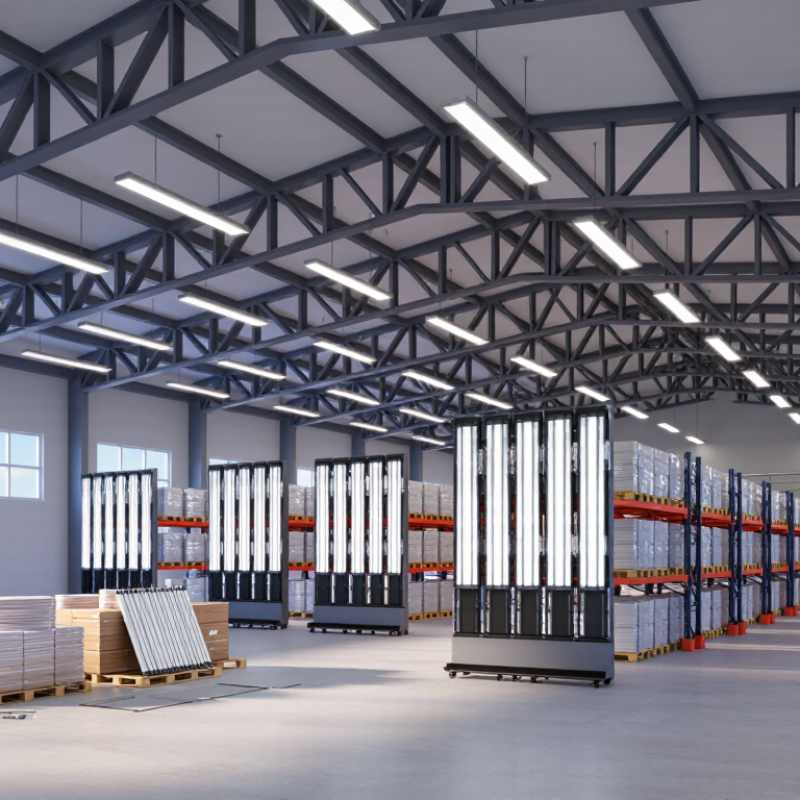
Define the light tube type before comparing prices or lumen claims. T5 and T8 tubes differ in diameter, socket design, and electrical compatibility. Measure the existing tube and check the label on its ballast. A wrong match can cause flickering, heat, or early failure.
Think about the actual application. Offices often need comfortable 4000K light with low glare. Warehouses may require higher output, wider beams, and strong impact resistance. Damp areas need suitable IP protection, while refrigerated spaces require stable cold-temperature performance. A Sensor Light Tube can reduce energy use in corridors, storerooms, and restrooms. It should still provide reliable activation under frequent movement.
Tips: Request the photometric file, operating temperature range, warranty terms, and installation guide. Confirm whether the tube works with a ballast or needs direct wiring. Ask for sample testing before placing a large order. Check the socket type in every target market. Small regional differences matter. Also inspect Emergency Lighting requirements and recycling arrangements with a qualified professional. I have seen buyers focus on wattage and overlook beam angle. That mistake made some aisles look bright while shelf corners remained dim. Performance is never defined by one number.
A Led Light Tube should be judged by useful brightness, not wattage alone. Check lumens for the actual light output. A 1,800-lumen tube may suit a small office, while a workshop may need more. Measure the room before ordering. I once chose by wattage and found the workbench remained dim.
Color temperature changes how a space feels. Choose 3,000K for warm hospitality areas, 4,000K for offices, and 5,000K or higher for detailed tasks. Check the color rendering index too. A CRI of 80 may work for storage rooms, but visual inspection often benefits from CRI 90 or above. Colors can look wrong otherwise.
Energy use involves more than the printed wattage. Compare lumens per watt, standby behavior, and expected operating hours. Confirm the tube’s input voltage and frequency match the installation site. This detail is easy to overlook. Check flicker performance, beam angle, and heat management as well. A narrow beam can create harsh stripes on shelves. A wide beam usually spreads light more evenly. Review the rated life, warranty terms, socket type, and safety documentation from the supplier. These records improve purchasing confidence, although paperwork alone cannot prove field performance. Ask for test data and sample units before placing a large order. Real conditions may differ.
For global buyers, tube size is not a cosmetic detail. A T5 tube measures about 16 millimeters in diameter and commonly uses a G5 bi-pin base. T8 tubes are wider and usually use a G13 base. They are not interchangeable, even when their lengths appear similar. Measure the existing lamp, socket spacing, and fixture depth before ordering. I learned this after a “matching” replacement left visible gaps at both ends.
Electrical compatibility needs equal attention. Check the rated voltage, frequency, ballast type, dimming method, and driver arrangement. A T5 Led Light Tube may support direct mains wiring, ballast operation, or both, but these options are not universal. Confirm whether the installation requires ballast removal. Verify 120 V or 230 V operation, along with 50 Hz or 60 Hz requirements. A wrong connection can damage the tube or create a safety risk. Use the manufacturer’s wiring diagram and have a qualified electrician inspect unusual circuits.
The U.S. Department of Energy reports that LED lighting can use at least 75% less energy than incandescent lighting and last up to 25 times longer. The International Energy Agency has reported that lighting represents roughly 15% of global electricity consumption. These figures support efficient upgrades, but real savings depend on correct installation. Compare lumen output, color temperature, power factor, and warranty terms. Certifications should match the destination market. I still treat energy claims cautiously; poor fit, glare, or early failure can cancel the expected benefit.
Tube length is shown using exact foot-to-millimeter conversions: 2 ft = 609.6 mm, 3 ft = 914.4 mm, 4 ft = 1,219.2 mm, and 5 ft = 1,524 mm. Before ordering, confirm the tube diameter, base type such as G5 or G13, socket spacing, rated voltage and frequency, and whether the installation requires a compatible ballast or ballast bypass.
Safety certification is more than a printed logo on a product box. Ask for the full certificate, test report, and declared model number. The model must match the light tube you receive. Check the issuing laboratory, test date, approval scope, and expiry status. A certificate for one housing may not cover another length or driver. That detail is easy to miss.
For global purchasing, compare the product with your destination market’s electrical requirements. Review input voltage, frequency, grounding, insulation, and protection against overheating. Look for evidence of flicker control, surge resistance, and safe materials near the tube’s hottest areas. If the tube will be used in a humid warehouse, inspect its ingress protection rating carefully. A higher rating is not always better for every installation. It may affect heat dissipation.
Product quality should be tested beyond appearance. Request lumen-maintenance data, color-rendering results, temperature tests, and batch inspection records. Order samples and run them for several hours before approving a large shipment. Listen for driver noise. Check loose covers, uneven brightness, and excessive heat. Small faults often appear early. However, documents can look convincing while real performance disappoints. I have learned that supplier explanations are useful, but measured evidence is stronger. Ask for clear warranty terms, replacement procedures, and traceable production records. Leave room for doubt. It protects the buyer.
When comparing smart light tubes, do not judge value by the purchase price alone. Check the rated lifespan, tested operating hours, and expected brightness after several years. A tube rated for 50,000 hours may still perform poorly if heat builds inside a narrow fixture. Measure the socket. Confirm voltage, frequency, dimming support, and communication standards before ordering internationally.
Warranty terms deserve close reading. A three-year warranty sounds strong, but coverage may exclude installation labor, shipping, water damage, or commercial use. Ask whether replacement units are shipped promptly and whether proof of purchase is required. Keep records. In my purchasing experience, unclear warranty procedures created more downtime than early product failures. That detail is easy to miss.
Build a total ownership cost model for each option. Include purchase price, freight, import fees, electrician labor, energy consumption, maintenance, and disposal. A cheaper tube using more electricity can cost more within two years. Compare wattage with estimated daily operating hours and local electricity rates. Also consider replacement access in your region. One overlooked shipment delay can affect an entire facility. I once prioritized a low unit price and underestimated installation time; the calculation looked efficient, but the project was not. Recheck the assumptions. Lifespan is an estimate, not a promise. Verify test methods, warranty exclusions, and local compliance documents before placing a large order.
| No. | Buying Tip | What to Compare | Typical Market Benchmark | Why It Matters | Ownership-Cost Impact |
|---|---|---|---|---|---|
| 1 | Verify the rated lifespan | Rated life, test conditions, and L70 specification | 30,000–60,000 hours is common; 70,000–100,000 hours is available in higher-duty designs. L70 indicates when output may decline to approximately 70% of initial lumens. | A longer rated life can reduce replacement labor, access equipment, and disruption in high-use locations. | Compare expected service years, not only the headline hour rating. Actual life also depends on temperature, driver quality, and operating hours. |
| 2 | Read the warranty terms carefully | Warranty duration, operating-hour limit, remedy, exclusions, and claim process | 3–5 years is common; 7 years may be offered for selected commercial products. Some warranties include a maximum annual operating-hour limit. | A long warranty has limited value if it excludes high ambient temperatures, frequent switching, moisture, or installation errors. | Check whether the seller covers product, shipping, labor, and replacement costs. Keep invoices and installation records. |
| 3 | Compare delivered light output | Initial lumens, maintained lumens, beam angle, and light distribution | Approximately 1,800–2,500 initial lumens is typical for a 1.2 m / 4 ft LED tube, depending on wattage and design. | Two tubes with the same wattage may illuminate a space differently because of optics, diffuser losses, and lumen maintenance. | Correct light output can reduce the number of tubes and fixtures required, lowering purchase and electricity costs. |
| 4 | Measure energy efficiency | System wattage, lumens per watt, power factor, and standby consumption | About 90–150 lm/W is a practical range for many LED tubes. A power factor of 0.90 or higher is generally preferable for commercial installations. | Higher efficacy lowers electricity use while maintaining similar brightness. | Annual energy cost can be estimated as: watts ÷ 1,000 × operating hours × electricity price. |
| 5 | Compare purchase and landed pricing | Unit price, minimum order quantity, packaging, freight, duty, taxes, and certification cost | Generic 1.2 m / 4 ft LED tubes often fall around US$5–20 per unit before freight and taxes, depending on specification and order volume. | The lowest quoted unit price may not be the lowest delivered cost for international buyers. | Request a landed-cost quotation with currency, Incoterm, shipping method, customs classification, and destination charges clearly stated. |
| 6 | Choose the correct electrical architecture | Ballast-compatible, ballast-bypass, direct AC, or external-driver configuration | Common input ranges include 120–277 V AC or 220–240 V AC; universal-input versions may cover approximately 100–277 V AC. | The wrong wiring method can cause flicker, overheating, safety risks, or immediate product failure. | Include electrician labor, ballast replacement or disposal, rewiring, and power-isolation requirements in the project budget. |
| 7 | Check color quality and comfort | CCT, CRI, flicker, color consistency, and glare control | Common CCT choices are 3,000 K, 4,000 K, and 5,000 K. CRI 80+ is common; CRI 90+ is preferred where color accuracy is important. | Appropriate color temperature and low flicker support visual comfort and consistent appearance across a site. | Reducing glare and color mismatch can prevent rework and premature replacement caused by user complaints. |
| 8 | Evaluate smart-control compatibility | Occupancy sensors, daylight harvesting, dimming protocol, wireless connectivity, and gateway requirements | Basic tubes may be non-dimmable; commercial options may support 0–10 V, DALI, PWM, or wireless control depending on the driver. | Smart control can reduce operating hours and improve zone-level lighting management. | Compare the tube price with sensors, controllers, gateways, commissioning, software, and maintenance subscriptions. |
| 9 | Match environmental and safety ratings | Operating temperature, humidity, IP rating, impact rating, fire performance, and certifications required in the destination market | Indoor dry-location tubes may have limited ingress protection; damp or dusty areas may require an appropriately rated enclosure or product. | Heat, moisture, dust, vibration, and chemical exposure can shorten driver and LED life. | Selecting the correct environmental rating lowers failure, replacement, inspection, and compliance risks. |
| 10 | Calculate total ownership cost | Purchase, installation, electricity, maintenance, replacements, disposal, controls, and financing over the evaluation period | For a simple comparison, evaluate a 5–10 year period using local electricity rates and actual annual operating hours. | A higher initial price may be justified when energy savings, service life, and reduced maintenance are materially better. | Use: TCO = product + installation + energy + maintenance + replacements + disposal − residual value. |
Supplier capability matters more than a polished catalog. Ask for factory capacity, aging-test records, LM-80 or TM-21 data, and batch traceability. The U.S. Department of Energy’s 2023 Solid-State Lighting report shows that laboratory LED efficacy can exceed 200 lumens per watt, while commercial performance is usually lower. Treat impressive figures carefully. An Outdoor Led Tube Light should also show its IP rating, operating temperature, surge protection, and expected lumen maintenance.
Tip: Request a sample from the same production line. Check connector fit, flicker, heat, and color consistency after several hours. I have seen buyers approve a bright sample, then receive a weaker batch. That gap deserves written quality controls. The IEA’s Energy Efficiency 2023 report states that LEDs represented roughly half of global lighting sales in 2022. Market maturity does not remove the need for inspection.
Packaging can decide whether the product arrives usable. Require foam separation, moisture protection, carton drop testing, and readable labels. World Bank’s Logistics Performance Index 2023 emphasizes tracking, shipment quality, and delivery timeliness. Ask for carton dimensions, gross weight, pallet limits, and shipping documents before payment. Support should include installation guidance, spare-part availability, response times, and a clear warranty process. Do not assume every supplier handles claims well. Test that promise with a small order first.
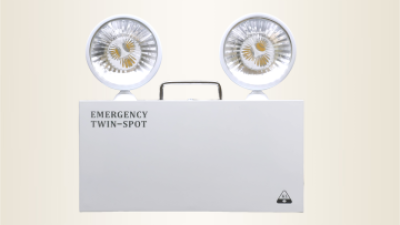
The S290Y220L1206-10C2 is a practical 12V surface-mounted emergency light designed for dependable visibility during power interruptions. Its twin-spot configuration uses two 3W LED heads, allowing light to be directed toward corridors, stairways, entrances, or other critical areas. The wall-mounted format helps save ceiling space, while the compact, streamlined housing suits residential properties, offices, retail units, workshops, and shared facilities. As a low-voltage solution, it can integrate with compatible 12V emergency power systems where stable backup illumination is required.
Energy efficiency is another important consideration in emergency lighting. The International Energy Agency has reported that lighting represents approximately 15% of global electricity consumption, highlighting the value of efficient LED technology in reducing operational demand. In addition, NFPA 101, the Life Safety Code, establishes performance expectations for emergency illumination and safe egress, making appropriate light distribution and reliable installation essential. With its two adjustable 3W LED spotlights, the S290Y220L1206-10C2 provides focused coverage for escape routes and essential access points without relying on high-power lamps. Before installation, users should verify 12V system compatibility, mounting conditions, wiring requirements, and applicable local safety standards.
Lumens show actual light output. A 1,800-lumen tube may suit a small office. A workshop may need more.
Use 3,000K for warm hospitality areas. Choose 4,000K for offices. Use 5,000K or higher for detailed work.
CRI 80 may suit storage rooms. Detailed inspections often benefit from CRI 90 or above. Otherwise, colors may look wrong.
Compare lumens per watt, standby behavior, and expected operating hours. Confirm local voltage and frequency. These details are easy to overlook.
Check flicker performance and beam angle. A narrow beam can create harsh stripes on shelves. A wide beam spreads light more evenly.
Request the complete certificate, test report, and declared model number. Check the laboratory, test date, approval scope, and expiry status.
Not always. One certificate may cover only one housing, length, or driver. Match the certified model with the received product.
Run samples for several hours. Check uneven brightness, loose covers, driver noise, and excessive heat. Small faults often appear early.
Review the ingress protection rating carefully. Also check grounding, insulation, overheating protection, and heat dissipation. Higher protection is not always better.
No. Documents may look convincing while field performance disappoints. Ask for measured test data, batch records, and clear replacement terms. Leave room for doubt.
Buying a Smart Light Tube requires more than comparing appearance or advertised brightness. Start by defining the tube type and intended application, such as residential, commercial, industrial, or decorative use. Then review key specifications, including lumens, color temperature, color rendering, dimming options, power consumption, and expected operating conditions. Confirm that the tube’s length, diameter, base, voltage, frequency, and wiring design match the existing fixture and local electrical system. Safety certifications, material quality, heat management, and consistent performance are also important indicators of product reliability.
To make a cost-effective decision, compare the expected lifespan, warranty coverage, unit price, installation requirements, and long-term energy and maintenance costs. A dependable supplier should provide accurate technical documentation, stable production capacity, quality control, protective packaging, and practical support before and after purchase. Buyers should also evaluate shipping arrangements, delivery reliability, replacement policies, and communication efficiency. By assessing both product performance and supplier capability, global buyers can select a Smart Light Tube that is safe, compatible, durable, and suitable for their specific project needs.